
Mitsuro Hikime is one of the most fascinating jewellery techniques to emerge into the wider jewellery world in recent years although in reality, it is anything but new.
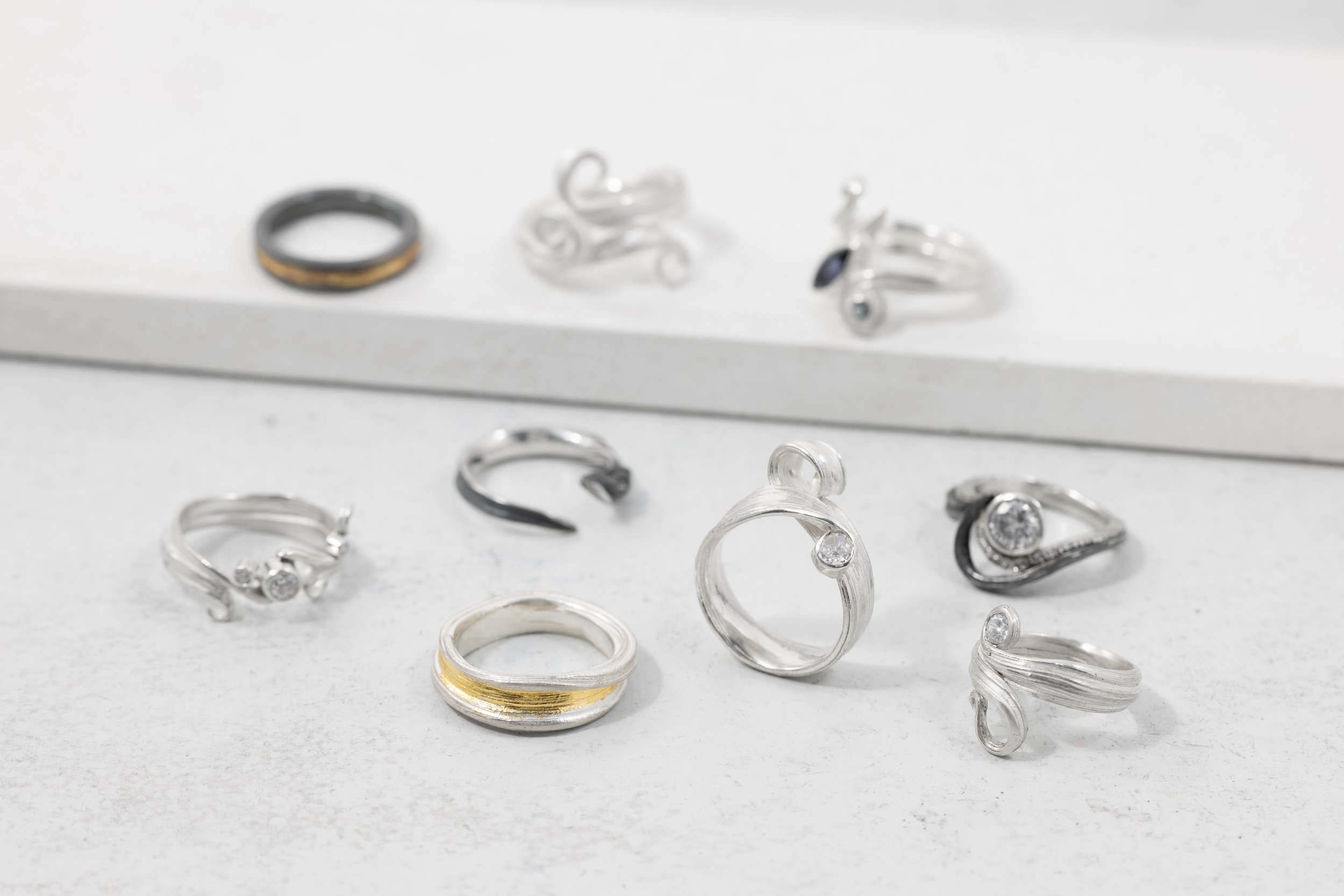
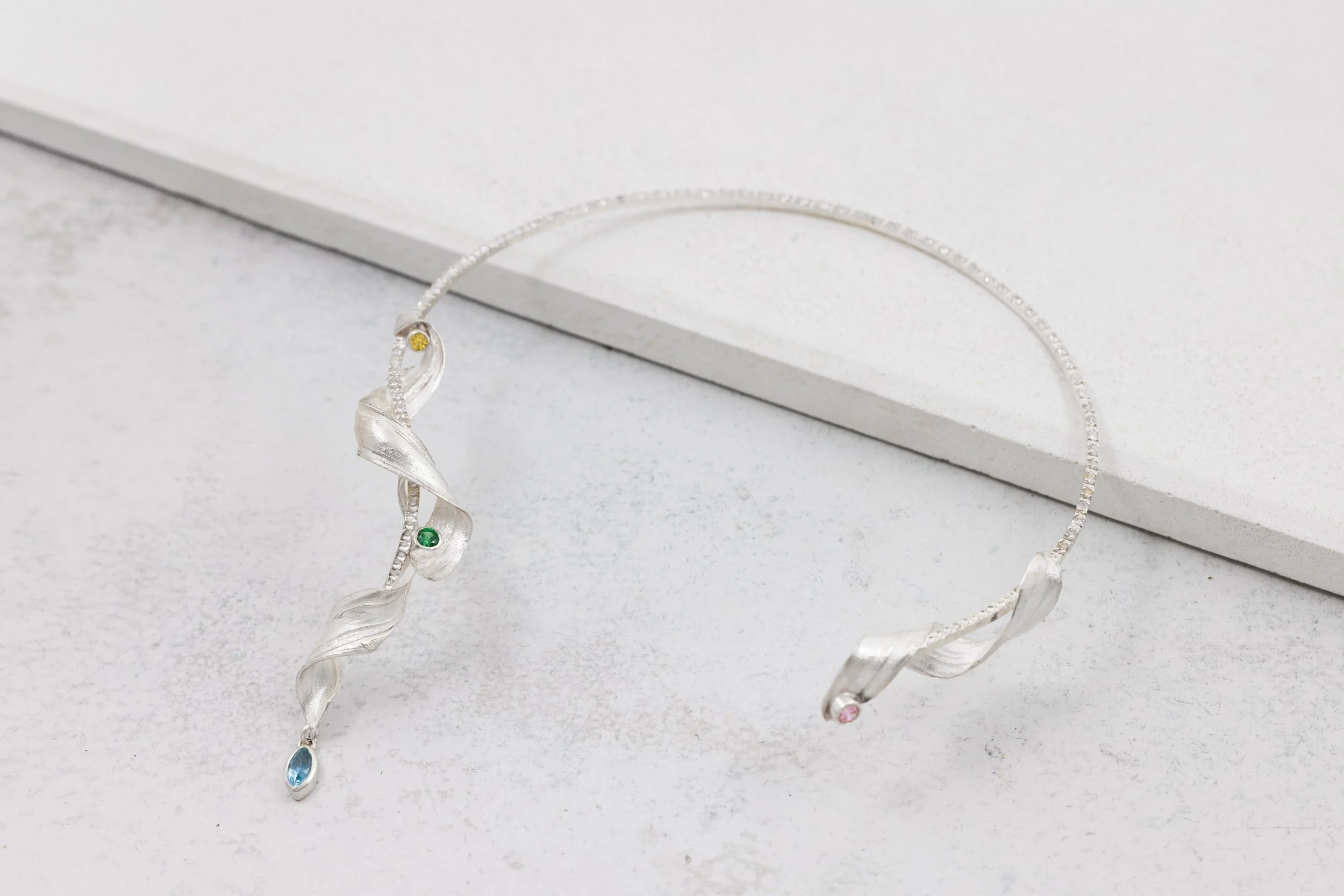
This ancient Japanese wax working technique creates beautiful flowing striations and organic textures that feel almost impossible to recreate by hand. Each piece has a natural, sculptural quality, with lines that resemble bark, petals, ripples or flowing fabric.
For many jewellers, Mitsuro Hikime feels completely different to traditional wax carving. It is softer, more instinctive, less controlled and often deeply meditative to work with.
But what exactly is Mitsuro Hikime? Where does it come from? And why are so many jewellers becoming obsessed with it?
Let’s explore some of the key questions people ask about this unique jewellery-making technique.
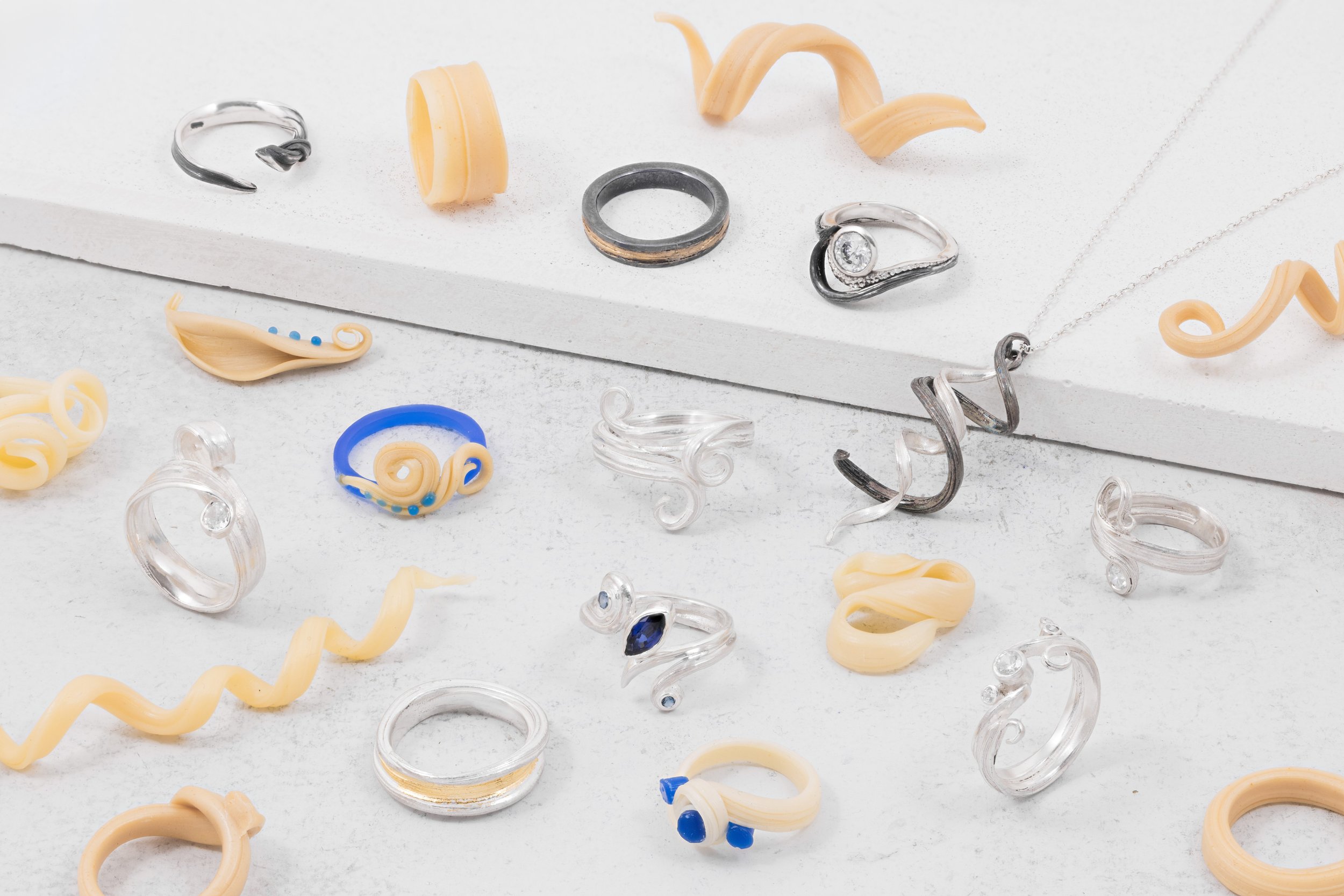
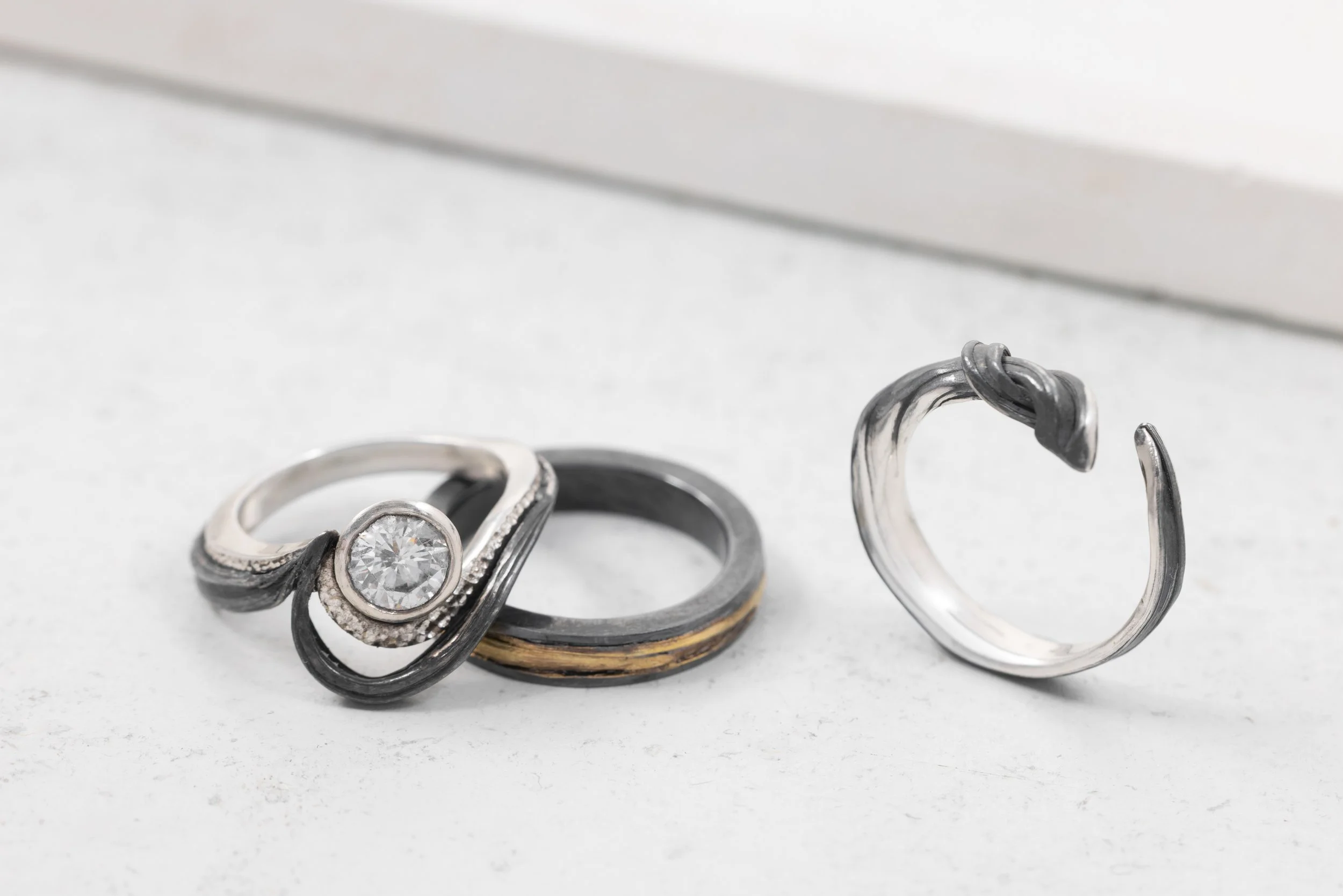
All photos in this post feature pieces made from Mitsuro Hikime by expert Lorna Romanengi. These are class samples from our online Mitsuro for Jewellers course taught by Lorna and are also included in the one year Diploma in Wax Jewellery.
What does Mitsuro Hikime mean?
The name Mitsuro Hikime has two parts.
Mitsuro refers to the wax itself and roughly translates to ‘honey wax.’ This relates to the beeswax traditionally used within the recipe.
Hikime refers to the textured lines created during the process. It translates roughly to ‘pulling lines’ or ‘drawn textures.’
Together, Mitsuro Hikime refers both to the handmade wax material and the process of pulling and shaping it to create flowing natural striations.
What is Mitsuro Hikime?
Mitsuro Hikime is an ancient Japanese wax jewellery technique traditionally used to create organic jewellery forms and sculptural textures.
The process involves creating a special wax mixture, warming it, then repeatedly pulling, stretching and folding it to create natural flowing lines through the material.
These textured wax forms are then transformed into jewellery through lost wax casting.
Unlike traditional wax carving, where a design is carved away from a hard wax block, Mitsuro Hikime is far more fluid and responsive. The material itself plays an active role in the final result.
No two pieces will ever be identical.
How old is the technique?
Mitsuro Hikime is believed to date back well over 1,000 years.
Written evidence of the technique exists from around 1,300 years ago, although it is thought to be significantly older. Historically, the knowledge was passed down orally rather than through books or formal written instruction.
For many years, the technique remained relatively unknown outside Japan. In recent years, however, jewellers around the world have started discovering and exploring it more widely.
Why is Mitsuro Hikime becoming so popular?
There are several reasons why Mitsuro Hikime is having a resurgence among contemporary jewellers.
It creates truly unique jewellery
Because the wax behaves organically, every piece is completely different. Even if you repeat the same process twice, the textures and lines will never form in exactly the same way.
In a world increasingly drawn to handcrafted and one-of-a-kind objects, this uniqueness is incredibly appealing.
It feels freeing to work with
Many jewellers are trained in highly precise, controlled techniques. Stone setting, fine jewellery and traditional fabrication often require exact measurements and careful planning.
Mitsuro Hikime asks for something different.
It encourages makers to let go slightly, respond to the material and allow the wax to guide the process. For many people, that feels refreshing, creative and surprisingly therapeutic.
It creates natural textures beautifully
The flowing lines created through Mitsuro Hikime feel almost impossible to imitate manually.
The textures naturally resemble forms found in nature — wood grain, petals, flowing water or bark — giving the finished jewellery an organic quality that feels alive.
What is Mitsuro wax made from?
Traditional Mitsuro wax is usually made from three main ingredients:
beeswax
pine resin
paraffin wax
Although the ingredients are relatively simple, the process of making the wax requires care because each material melts differently and affects the final behaviour of the wax.
Many jewellers choose to make their own Mitsuro wax because it helps them understand the material more deeply and allows them to experiment with the consistency and behaviour of different batches.
Is Mitsuro Hikime difficult to learn?
Mitsuro Hikime is simple in concept but takes practice to master.
The basic movement - pulling and folding the wax - can be learned relatively quickly. However, understanding how the wax behaves takes time and experimentation.
The wax is highly sensitive to:
temperature
pressure
hand warmth
speed of movement
working environment
When warm, the wax becomes soft and malleable. When cold, it can become brittle and snap easily.
Part of learning Mitsuro Hikime is learning how to work with the material rather than trying to fully control it.
Do you need previous jewellery experience?
Not necessarily.
Beginners can absolutely enjoy exploring Mitsuro Hikime, especially if they are interested in creativity, texture and organic forms.
However, jewellers with existing experience in wax carving, fabrication or stone setting often find exciting ways to combine Mitsuro Hikime with their current skills.
It works beautifully alongside traditional jewellery-making techniques.
What can you make with Mitsuro Hikime?
Mitsuro Hikime can be used to create many different types of jewellery, including:
rings
pendants
earrings
bangles
statement pieces
sculptural jewellery forms
The technique works particularly well for flowing, curved and organic designs where the striations can really shine.
Some jewellers use Mitsuro Hikime for entire pieces, while others incorporate it as a feature within a larger design.
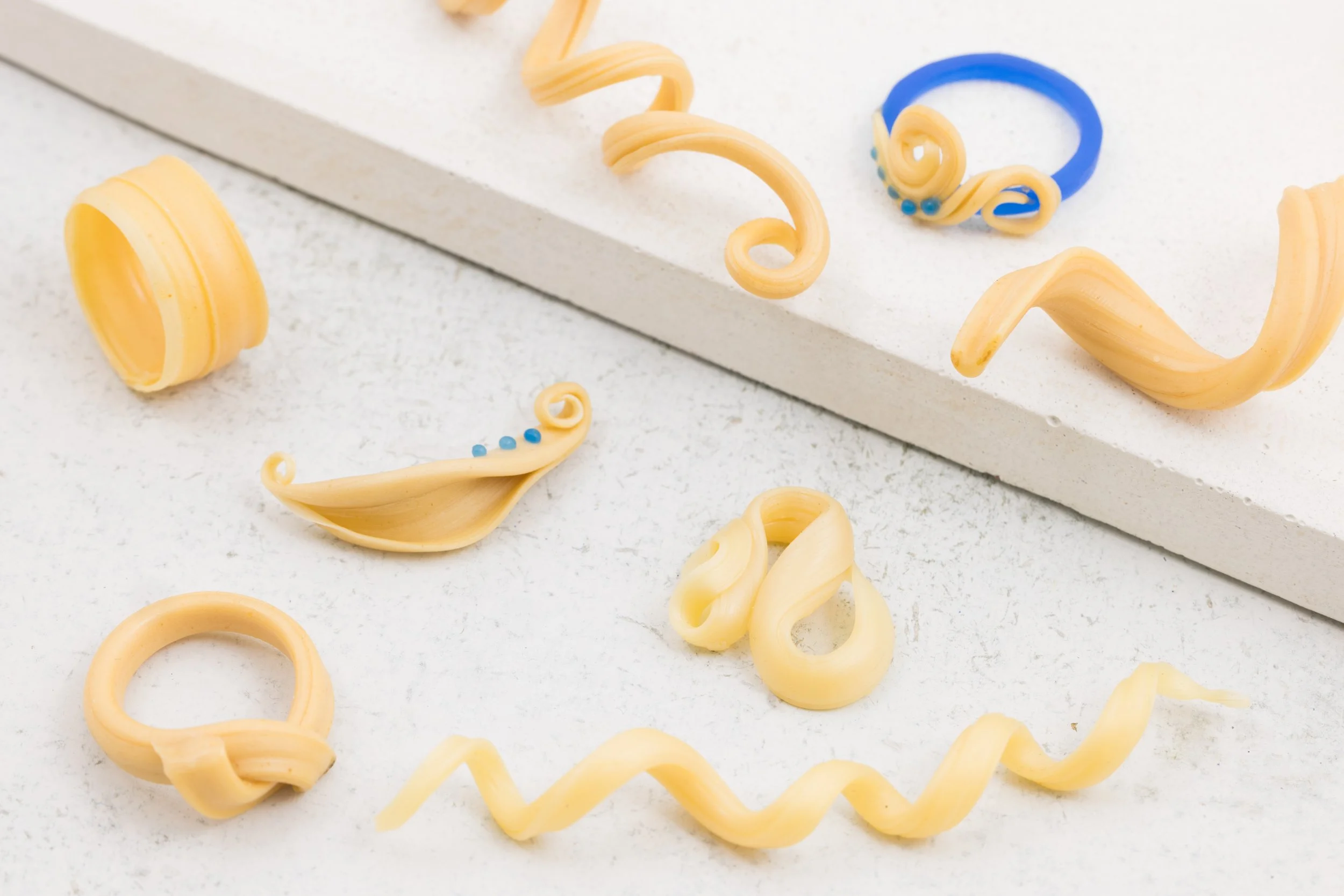
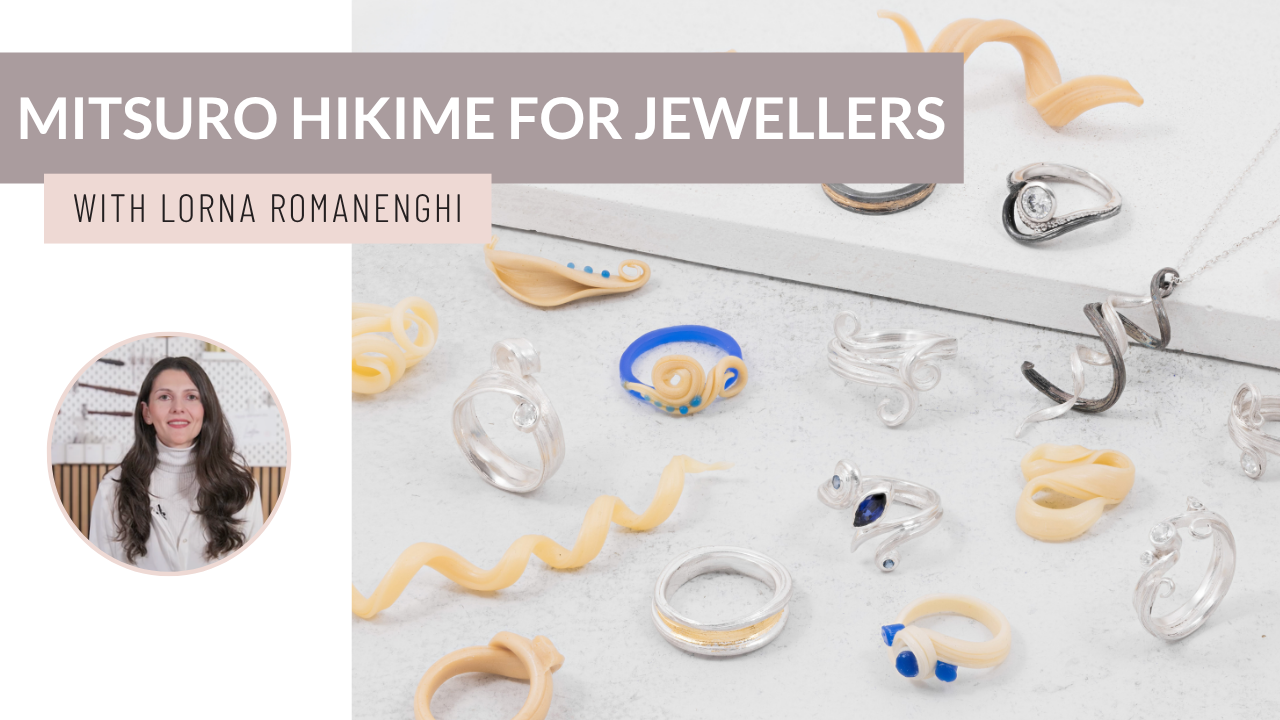
You can see some examples of Mitsuro Hikime wax that has been shaped here and how it has been combined with other jewellers waxes (the blue wax)
Can Mitsuro Hikime be combined with other waxes?
Yes and many contemporary jewellers are exploring exactly that.
Mitsuro Hikime can be combined with traditional jewellers waxes to create more structured designs or to solve practical design challenges.
For example, a jeweller might use Mitsuro for the organic flowing element of a design while using hard carving wax for a stone setting or structural section.
This blending of ancient and contemporary techniques is opening up exciting creative possibilities.
Can you use stones with Mitsuro Hikime jewellery?
Yes, although stone setting is usually planned for after casting.
Because Mitsuro wax is either soft or brittle depending on temperature, it is not ideal for drilling, burring or preparing traditional stone seats directly into the wax.
Instead, many jewellers:
add settings after casting
solder stone settings onto the cast piece
combine Mitsuro with harder waxes during the design process
design organic forms that naturally frame stones
The flowing textures of Mitsuro Hikime can work beautifully alongside gemstones, especially when used thoughtfully within the design.
What metals can be used for Mitsuro Hikime?
Mitsuro Hikime pieces are typically cast using standard lost wax casting techniques.
Common metals include:
sterling silver
gold
bronze
brass
Silver is often the most popular choice because it highlights the striations and flowing textures particularly well.
What happens after casting?
Casting is only part of the process.
Once a Mitsuro piece has been cast into metal, the jewellery still needs to be:
cleaned up
refined
shaped
polished
finished
Many jewellers also experiment with additional finishing techniques such as:
oxidation
patinas
depletion gilding
keum boo
These finishes can help emphasise the texture and depth of the striations.
Does Mitsuro Hikime work every time?
Not always - and that is part of its character.
Mitsuro Hikime is a responsive, living material. Sometimes the wax behaves beautifully. Other times it may crack, tear, distort or simply refuse to cooperate.
Learning to work with those variables is part of the process.
For many makers, this unpredictability becomes part of the joy. Instead of forcing the material into submission, you begin collaborating with it.
Why do jewellers love Mitsuro Hikime so much?
For many jewellers, Mitsuro Hikime offers something that modern making can sometimes lose: play.
It encourages experimentation, instinct and discovery. It slows you down. It asks you to pay attention to your body, your hands and the material itself.
And perhaps most importantly, it creates jewellery that feels deeply handmade and impossible to replicate exactly.
In an increasingly digital and fast-moving world, there is something very special about that.
Interested in learning Mitsuro Hikime?
At Jewellers Academy, we love exploring both traditional and contemporary jewellery techniques.
Our online Mitsuro Hikime for Jewellers course with expert in the technique Lorna Romanengi teaches you how to make your own Mitsuro wax, master the pulling techniques, create jewellery designs and finish your cast pieces professionally.
This brand new course is currently available at 50% off in our launch offer - but only until 22nd May 2026 so don’t wait to enrol.
watch the course trailer
Diploma in Wax Jewellery
This course is included in the one year Diploma in Wax Jewellery. If you really want to explore the options you have with making jewellery with wax, including how to set stones, take a look at what else you will learn.
In-person workshop
If you prefer to learn in person, Lorna teaches a 2 day Mitsuro Hikime workshop at our sister company Jewellers Academy Brighton, England.