
Why Good Product Photography Matters: 5 Ways Better Photos Can Help Your Jewellery Business
As jewellers we spend hours designing and making a piece of jewellery - choosing the materials, sourcing great stones, filing, polishing and refining.
Then you take a photograph and somehow it does not look the same.
The silver appears grey, the gemstone has lost its colour and the beautiful texture you created is barely visible. The photograph might be technically fine, but it does not capture what makes the piece special.
This is a common frustration for jewellery makers. Jewellery is small, detailed and often highly reflective, which can make it particularly challenging to photograph. Even a beautiful piece can look flat, dark or unclear if the lighting, focus or positioning is not quite right.
When you are running a jewellery business, your photographs are not simply a record of what you have made, they are often the first opportunity a potential customer has to experience your work.
Here are five ways better product photographs can support your jewellery business, along with some practical tips you can start using straight away.
1. Good photographs create a strong first impression
When someone discovers your jewellery online, they will often see a photograph before they read your product description, learn about your materials or hear the story behind the piece.
That image creates an immediate impression of both the jewellery and the business.
Clear, considered photographs can help your work feel professional and carefully presented. They show that you have taken the same care with the customer experience as you have with the jewellery itself.
This does not mean every photograph needs to look like an expensive magazine campaign. A simple, well-lit image with a clean background can be extremely effective. The most important thing is that the jewellery is easy to see and remains the focus of the photograph.
Try this
Before taking your photograph, look carefully at everything within the frame.
Is the background helping the jewellery stand out, or is it distracting from it? Are there any marks, dust or unwanted objects visible? Is the piece positioned neatly?
Small adjustments can make a significant difference to the finished image.

2. Photographs help customers see the quality of your work
Customers viewing jewellery online cannot pick it up, turn it over or examine it closely. They are relying on your photographs to show them the craftsmanship, finish and detail of the piece. This is particularly important for handmade jewellery, where the details are often part of what makes the work special.
A clear close-up can show texture, stone setting, decorative details and the finish of the metal. Additional photographs can show the clasp, the back of the piece and any details that may not be visible in the main image.
Good lighting is essential here. If the photograph is too dark, overexposed or out of focus, those details can disappear.
Jewellery also needs to be clean before it is photographed. Smartphone cameras can pick up tiny fingerprints, dust and marks that may not be noticeable when you are holding the piece.
Try this
Clean your jewellery and your phone camera lens before every photography session.
Tap the jewellery on your phone screen to set the focus, and avoid using digital zoom. Instead, move the phone closer while checking that the camera can still focus sharply.
Take several photographs and review them on a larger screen before putting everything away. It is much easier to retake an image while your setup is still in place.
3. Accurate photographs build customer confidence
Buying jewellery online involves a degree of trust.
The customer wants to feel confident that the piece they receive will look like the jewellery they saw on your website or social media.
Clear photographs taken from several angles can reduce uncertainty and help customers understand exactly what they are buying. Accurate colour is particularly important when photographing gemstones, enamel, beads and different metals.
Heavy filters or excessive editing may make an image look striking, but they can also change the appearance of the jewellery. The aim of editing should be to help the photograph look more like the real piece, not less.
Photographs can also answer practical questions. A model image or photograph of the jewellery being worn can help communicate size and proportion. A close-up can show the fastening. A side view can show the depth of a ring or pendant.
The easier it is for a customer to understand the piece, the more confidently they can make a decision.
Try this
Create a simple list of the photographs you need for each product.
This might include:
one clear main product image
a close-up showing the detail
a photograph of the back or fastening
an image showing scale
a styled or model photograph
Using the same list each time makes your photography process easier and helps you create more complete product listings.
4. Consistent photographs strengthen your jewellery brand
Your photography is part of your visual identity.
When your images use similar lighting, backgrounds, styling and editing, they begin to feel like they belong together. This can make your website, online shop and social media look more cohesive and professional.
Consistency does not mean every photograph has to be identical. You can still experiment with props, colours and styled images. However, it is helpful to develop a recognisable approach that complements your jewellery.
For example, you might choose clean, neutral product photographs for your online shop and use more styled images for social media. The two types of photography can still feel connected through your choice of background, lighting or editing.
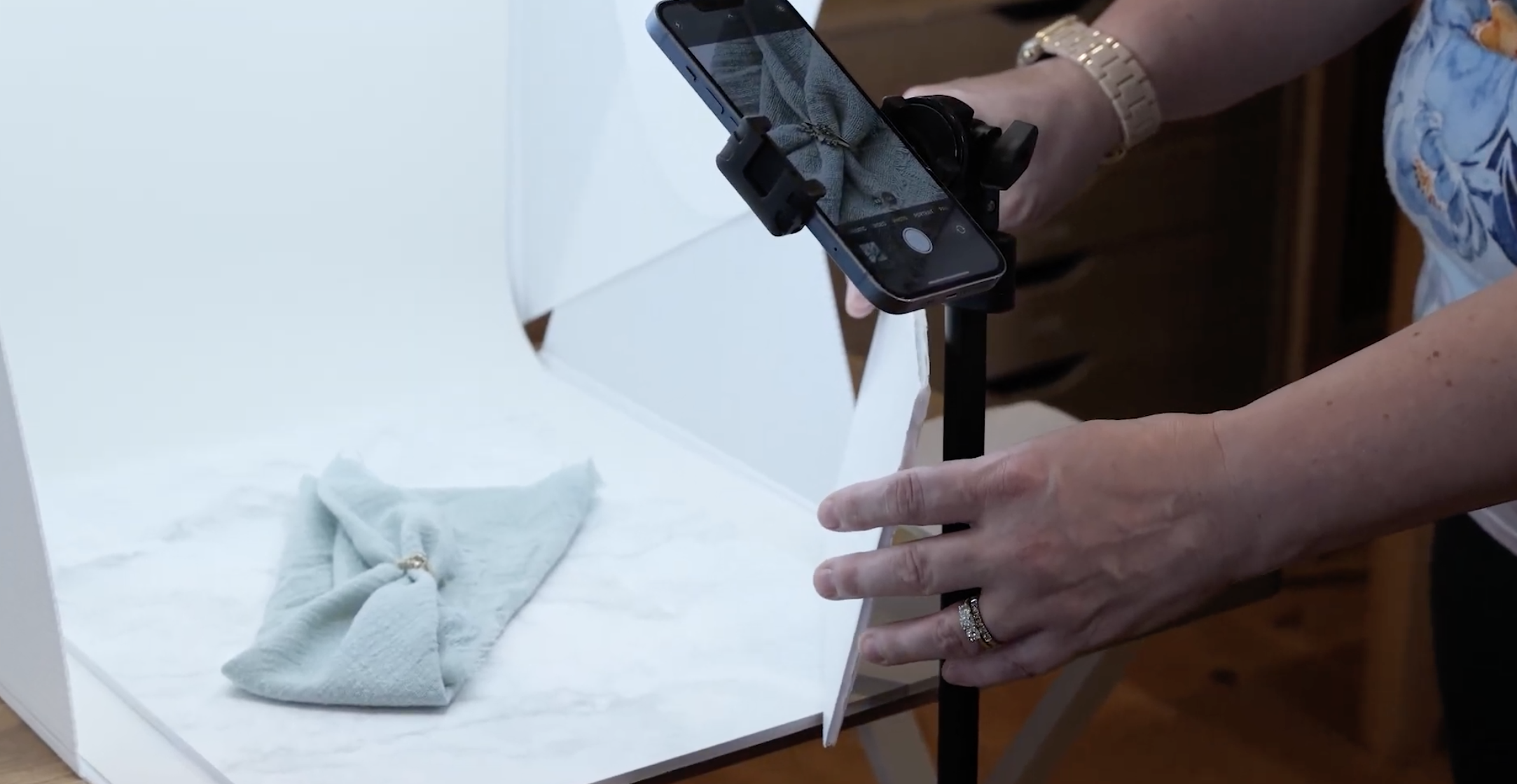
A repeatable setup is helpful here. When you know where to position your phone, jewellery and lighting, it becomes much easier to create similar results each time.
You will also spend less time trying to remember what worked during your previous photography session.
Try this
Take a photograph of your photography setup once you are happy with it.
Include the position of the jewellery, phone, lighting, reflectors and background. You can then use that image as a reference the next time you need to photograph a new piece or collection.
It can also be useful to make a note of the time of day if you are working with natural light.
5. Better photographs make marketing your jewellery easier
Running a jewellery business requires a regular supply of images.
You may need photographs for product listings, launches, emails, social media posts, press features, wholesale catalogues, applications and promotional materials.
When you have a strong collection of photographs, it becomes much easier to talk about and market your jewellery.
One photograph can often be used in several ways. A clear product image might be used on your website and in an email. A close-up of a detail could become a social media post about your making process. A styled photograph could be used to launch a new collection.
Taking a variety of images during one photography session gives you more material to work with and helps you avoid having to set everything up again every time you want to post.
Better photography can also give you more confidence in sharing your work. When you feel that your photographs represent the quality of your jewellery, it is easier to direct people towards your website, promote a new collection or approach potential stockists.
Try this
Before your next photography session, make a simple shot list based on how you plan to use the images.
As well as photographing the complete piece, consider capturing:
close-ups of interesting details
the jewellery being held or worn
different angles
portrait and landscape versions
images with space for text
behind-the-scenes photographs of the setup
A little planning can give you a useful bank of content from one session.
You do not need an expensive camera to take better jewellery photographs
Professional product photography is valuable, particularly for major campaigns or important collections. However, most jewellery businesses also need to be able to create regular images themselves.
The good news is that you do not need a DSLR camera or a large photography studio to improve your images.
Modern smartphones are capable of taking excellent photographs. The biggest difference often comes from understanding how to use light, position the jewellery, control reflections, choose a background and edit the finished image.
Once you have a setup and process that work for you, photographing new pieces can become far more manageable.
Learn to photograph your jewellery using your smartphone
In our online course, Photographing Your Jewellery Using Your Smartphone, professional product photographer and experienced jeweller Karen Young shows you how to take clear, beautiful photographs using the phone you already own.
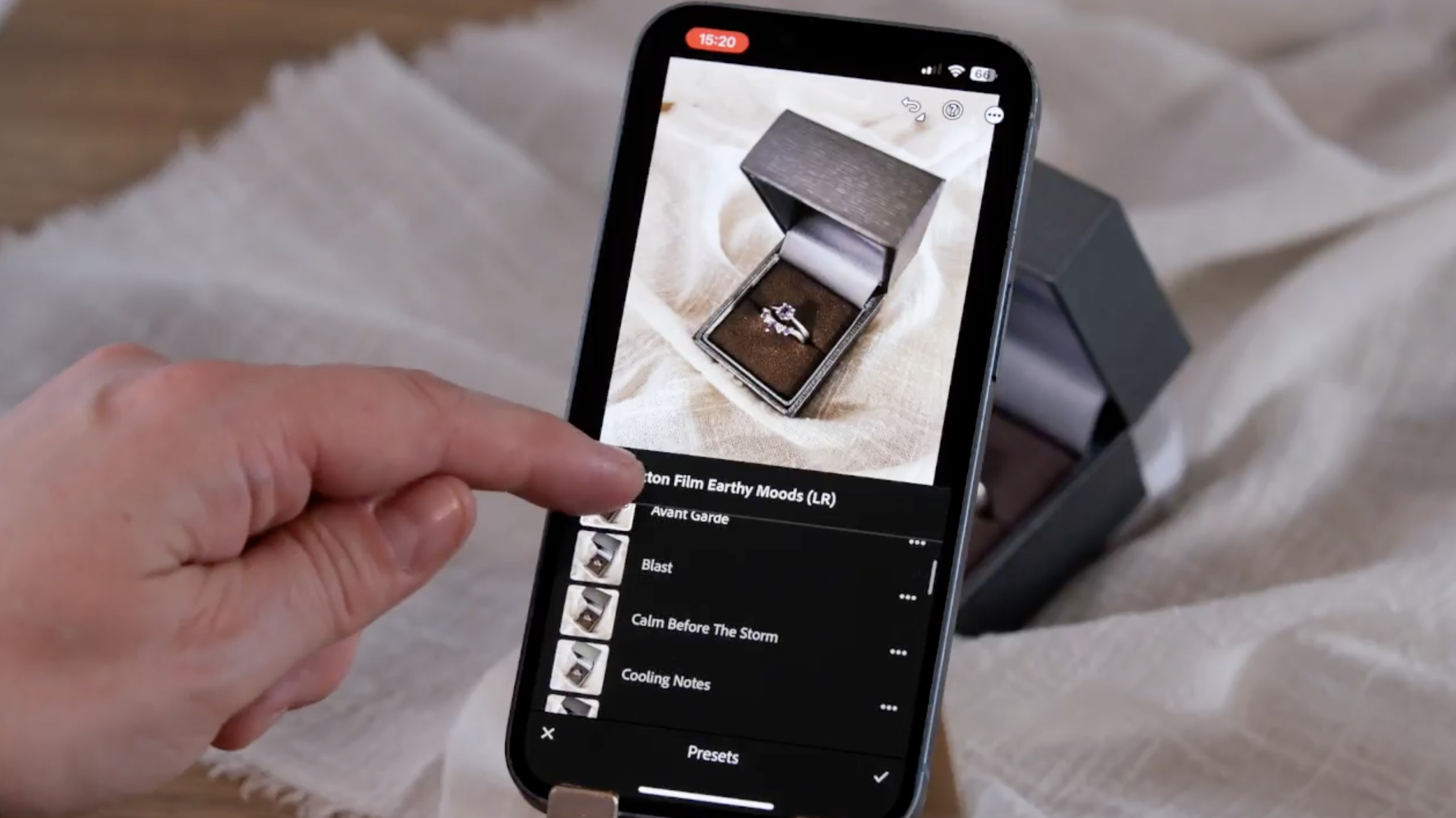
Karen takes you through the important stages of creating your setup, working with natural and continuous light, using reflectors and light tents, styling your photographs, using your smartphone camera and editing your images with Lightroom Mobile.
The course has been created specifically for jewellers, so the teaching focuses on the particular challenges involved in photographing shiny metals, gemstones and small details.
It includes 12 focused, professionally filmed lessons, carefully edited to show you all the important teaching and demonstrations without making you watch the adjusting, repositioning and inevitable faffing between each shot.
You will receive lifetime access, allowing you to return to the individual lessons whenever you are photographing a new piece or collection.
Take a look at the Photographing Your Jewellery Using Your Smartphone course