
Stone Setting Tips for Jewellers: Common Mistakes, Beginner Advice and Advanced Techniques
Stone setting is one of the most exciting skills to learn in jewellery making but it can also feel one of the most intimidating.
Whether you’re learning your very first bezel setting or exploring advanced techniques like pave, channel setting or micro claws, stone setting combines technical precision with creativity in a way that can completely transform your jewellery designs.
In this free Jewellers Academy Benchtips session, Jessica Rose was joined by jewellery tutor and stone setting expert Anelia Kuprina to answer your stone setting questions live. Together they discuss beginner-friendly settings, common mistakes, how to stop stones wobbling, claw setting tips, setting stones in wax and much more.
Benchtips is our free live online series designed to give jewellers direct access to expert guidance in jewellery making and jewellery business. Each session is hosted live on Zoom and gives jewellers the chance to ask questions, learn practical techniques and connect with other makers at all stages of their jewellery journey.
watch now
Have a question? skip to the answer now
Around 1 min: What are the main types of stone setting, and where should beginners start?
Around 7 min: What are the most common stone setting mistakes beginners make?
Around 14 min: How can you let more light into tube and collet settings?
Around 17 min: What is heat sink setting in wax, and can you set stones in wax?
Around 22 min: What’s the difference between a collet setting and a tube setting?
Around 26 min: How do you stop stones wobbling in claw or bezel settings?
Around 31 min: What can you do if a cabochon is rounded on the back?
Around 33 min: Do you need to anneal a setting before stone setting?
Around 35 min: What’s the smallest stone size you would use in a claw setting?
Around 39 min: What can you do if your claws are too thin or break?
Around 47 min: Do you need a motorised setting handpiece, or can you set by hand?
Around 50 min: In channel setting, do you slide stones along one seat or seat each stone separately?
Around 52 min: Can you cast raw stones in place in wax?
Around 53 min: How do you get enough metal for bead or star setting?
Around 57 min: How do you shape claws without scratching the stone

Some of the stone setting projects on the Diploma in Silver Jewellery
Top left: collet setting, top right: cast settings/claw setting
Bottom left: shaped cabochon setting, bottom right: tube setting
What questions were covered in this session?
What are the main types of stone setting and where should beginners start?
Anelia explains that most jewellers begin with rub-over settings (also known as bezel settings), where metal is pushed over the edge of the stone to hold it securely in place.
From there, jewellers often progress to:
Tube settings
Collet settings
Claw settings
Flush settings
Grain settings
Channel settings
Pave settings
Micro setting techniques
One of the reassuring points raised in the session is that stone setting is incredibly broad. Struggling with one technique does not mean you won’t enjoy or succeed with another. Different settings require different tools, movements and approaches.
Common beginner mistakes in stone setting
One of the biggest mistakes beginners make is rushing to put the stone into the setting before the seat has been properly prepared.
As Anelia explains, most of stone setting success happens before the stone is actually set. Careful marking out, accurate burr work and precise seat preparation make the final setting stage dramatically easier.
Other common beginner mistakes include:
Removing too much metal too quickly
Using bezel walls that are too thick
Not testing settings before using expensive stones
Trying to work too fast
Working while tired or impatient
Not checking whether a stone is sitting securely before setting
A major theme throughout the session is that stone setting rewards patience and precision.
Why slow working matters in stone setting
Jess shares that one of the biggest lessons she learned from professional setters was just how slowly they work.
On social media, stone setting can look quick and effortless because videos are sped up dramatically. In reality, a setting that takes seconds on Instagram may have taken several hours at the bench.
Good stone setting requires:
Focus
Calmness
Precision
Repeated checking
Small adjustments
Taking tiny amounts of metal away at a time is far safer than trying to rush the process.
How to stop stones wobbling in settings
A wobbling stone is one of the most frustrating issues for beginner stone setters.
Anelia explains that if a stone rocks or moves, it means there is uneven contact somewhere underneath the stone. One area is touching while another has a gap beneath it.
This matters because uneven pressure can:
Crack the stone
Cause the setting to fail
Make the stone sit crooked
Create poor light reflection
The solution is careful seat adjustment in very small increments.
Helpful techniques include:
Checking the stone repeatedly
Looking at the setting against the light
Using magnification
Adjusting only tiny areas at a time
Understanding that not all stones are perfectly calibrated
Over time, setters develop a feel for where metal needs to be removed.
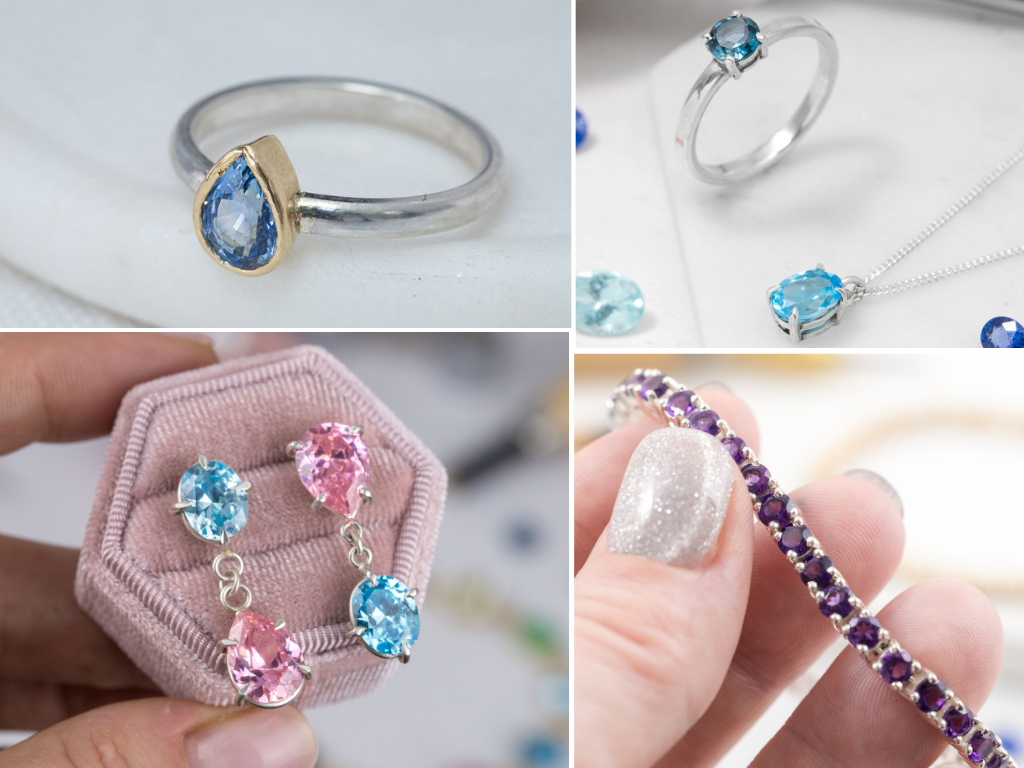
Some of the stone setting projects in the Diploma in Fine Jewellery
Top left: shaped collet, top right: double gallery claw setting
Bottom left: shaped claw setting, bottom right: tennis bracelet
Tips for bezel, tube and collet settings
The session also covers several useful tips for rub-over style settings.
Allowing more light into a stone
If a stone appears dark in a tube or collet setting, possible solutions include:
Reducing how much metal covers the stone
Creating open backs
Adding decorative cut-outs
Polishing the inside of the setting
Cleaning away polishing compound and oxides thoroughly
Light reflection plays a huge role in how brilliant a faceted stone appears.
Rounded cabochon backs
If a cabochon has a curved back and wobbles in the setting, solutions include:
Soldering support wire inside the bezel
Creating a partial cut-out in the backplate
Adjusting the design to stabilise the stone
Stone setting in wax and cast-in-place stones
One of the most interesting discussions in the session explored setting stones in wax and cast-in-place techniques.
Jess explains that wax stone setting works particularly well for:
Organic jewellery designs
Sculptural forms
Experimental textures
More fluid, natural aesthetics
The session discusses:
Heat sink setting methods
Heating stones slightly before pressing into wax
Cast-in-place stone setting
Which stones can survive casting
Why treated stones are unpredictable during casting
While stones such as sapphires, diamonds and CZs are sometimes suitable for cast-in-place work, modern stone treatments mean results can never be fully guaranteed.
This makes cast-in-place setting exciting but also experimental.
Claw setting tips for jewellers
Claw settings bring their own challenges, particularly when working with fine wires.
Anelia shares several important tips:
Beginners should start with slightly thicker claws
Thin claws are easier to overheat during soldering
Poor solder joins can cause claws to snap off later
Undercutting too deeply weakens the claw
Burr control is essential
Larger practice settings help build confidence
One particularly helpful insight was that beginners often remove too much metal too quickly while undercutting claws.
Again, the advice returns to:
Going slowly
Removing tiny amounts at a time
Practising repeatedly
Using magnification when possible

Some of the stone setting projects in the Diploma in Wax Jewellery
Top left: cast in place stone setting, top right: statement oval stone setting
Bottom left: build up wax technique claw setting, bottom right: star setting
Do you need expensive stone setting tools?
A question many jewellers ask is whether they need motorised handpieces and specialist stone setting equipment.
The reassuring answer from both tutors was: not necessarily.
While specialist tools can make work faster and more precise, many traditional setting techniques were historically done entirely by hand.
Learning hand skills first often creates stronger foundational stone setting abilities before progressing to advanced equipment.
Star setting, grain setting and gravers
The session also explores bead setting and star setting techniques using gravers.
Some important advice included:
Gravers must be properly sharpened and polished
Metal must be securely supported
Beginners often need to cut deeper than they expect
Graver control develops through repetition
Practice plates are incredibly valuable
Jess explains that practising repeatedly on copper plates before moving to silver or gold helps jewellers develop confidence without fear of ruining expensive materials.
Final thoughts on learning stone setting
Stone setting can feel overwhelming at first, but it is one of the most rewarding jewellery skills to develop.
The key takeaway from this session is that progress comes from:
Patience
Precision
Practice
Curiosity
Repetition
Every jeweller struggles with new techniques at the beginning. Over time, those tiny adjustments, repeated exercises and careful observations build into real confidence at the bench.
And perhaps most importantly: there is not just one type of stone setting to learn. Exploring different approaches can help you discover the techniques and styles you enjoy most.
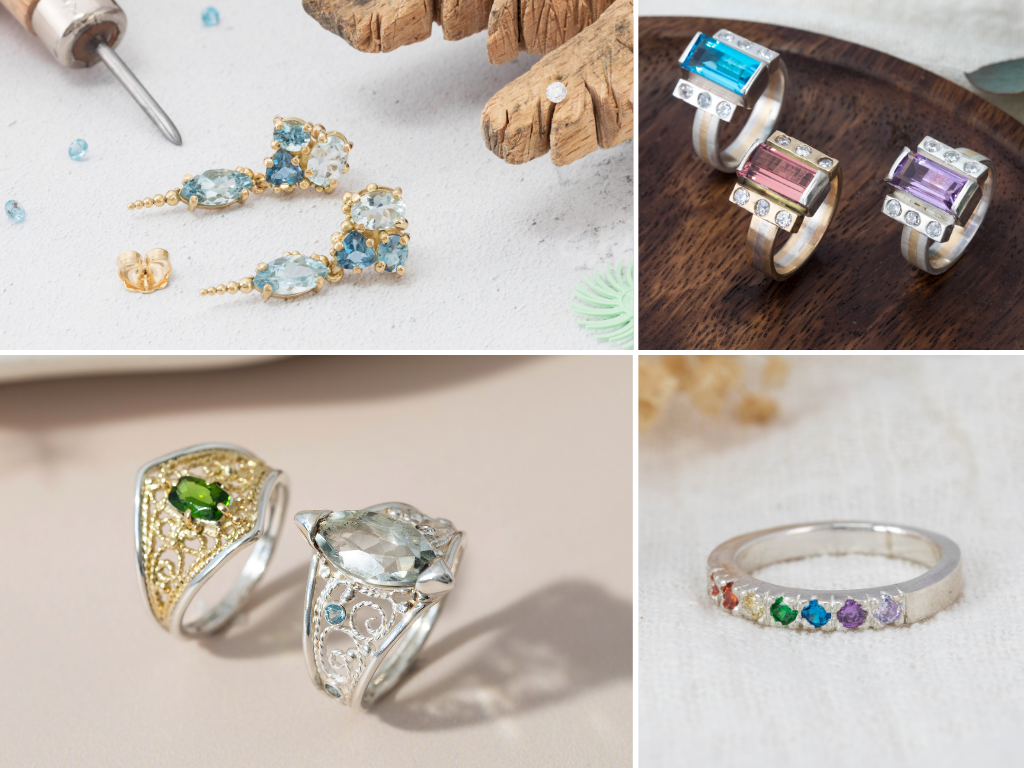
Some of the stone setting projects on the Advanced Jewellery Diploma
Top left: shaped stone claw setting, top right: baguette stone setting and flush setting
Bottom left: filigree, bottom right: eternity ring split claw setting
Explore Jewellery Diploma Courses at Jewellers Academy
At Jewellers Academy we offer a range of online jewellery Diploma programmes covering stone setting from beginner through to advanced levels, including:
Our courses include support from expert tutors, practical demonstrations, detailed projects and a supportive jewellery community to help you build confidence in your skills.