
Wax Jewellery for Beginners: Benchtips Q&A on Wax Carving, Casting and Design
Wax jewellery is one of the most exciting and creative ways to make jewellery. Whether you are completely new to the process or already experimenting with wax carving and lost wax casting, it opens up a huge range of design possibilities.
In this recent Jewellers Academy Benchtips session, Jessica Rose was joined by expert jeweller and tutor Jane Taylor to answer your questions about wax jewellery making. Together, they covered everything from how wax casting works, to choosing a caster, to avoiding common mistakes and building a jewellery collection from your wax designs.
If you have ever wondered how wax turns into silver, how much casting costs, or whether wax jewellery is right for beginners, this session is full of practical advice and encouragement.
Key Moments in This benchtips session
Have a specific question? Skip to it now!
00:00: Welcome and what Benchtips sessions are
00:12: What is wax jewellery? (beginner explanation)
01:40: Why wax is great for creativity and beginners
02:55: How long does it take to learn wax jewellery?
04:05: Do jewellers work exclusively in wax?
05:05: Wax vs metal: where the time really goes
06:20: Common misconceptions (does wax melt when worn?)
07:05: How lost wax casting works (simple explanation)
09:20: Moulds vs direct casting (what’s the difference?)
11:45: How much does casting cost? (real examples)
13:40: Hallmarking and working with casting houses
14:35: Should you attach sprues or leave it to the caster?
15:00: How to safely package wax pieces for casting
16:05: Tips for finishing textured wax before casting
17:00: Are jewellers switching to bronze or base metals?
18:30: Stain-free / Argentium silver explained
19:45: Can you hollow out wax designs to reduce weight?
22:50: Designing for weight, cost and wearability
23:45: Saving money using wax for fine jewellery
24:20: Ring sizing: how it works with wax casting
27:10: Fixing porosity and casting imperfections
30:45: Working with platinum in wax vs hand fabrication
33:45: Cast-in-place stone setting (how it works)
36:50: Recommended wax tools and wax pens
39:30: Choosing a casting company (what to look for)
44:20: Tips for beginners getting their first pieces cast
47:30: How thin can wax be? (design limits explained)
49:30: Shrinkage in casting: what to expect
51:30: Building a jewellery collection from wax designs
56:30: What happens if things go wrong (scratches, slips etc.)
59:00: Final advice: getting started with wax jewellery
What is wax jewellery?
Wax jewellery is jewellery that begins as a design made in wax, which is then cast into metal using the lost wax casting process. Rather than fabricating a piece directly in sheet metal or wire, you create the form first in wax and then have it transformed into silver, gold, bronze, platinum or another metal by a casting house.
As Jane explained during the session, wax is a wonderfully accessible material to work with. It is creative, versatile and surprisingly calming. It also gives makers freedom to try forms, textures and details that may feel much harder to create directly in metal.
For many jewellers, wax is an exciting introduction to design-led jewellery making. It can also be a practical way to budget, because you can weigh the wax model before casting and get a rough idea of the likely metal weight and cost.
Why jewellers love working in wax
One of the strongest themes from the session was that wax gives you freedom.
It is ideal for jewellers who want to:
explore more sculptural or organic forms
create detailed textures before casting
prototype ideas before committing to precious metal
design repeatable pieces and collections
make pieces that would be more complex to fabricate by hand in metal
Jane described wax as a material with “no limits”, and that sense of possibility came through strongly throughout the conversation. You do not need to be an experienced silversmith or goldsmith to begin. You can start simple, develop your confidence quickly and build your skills over time.
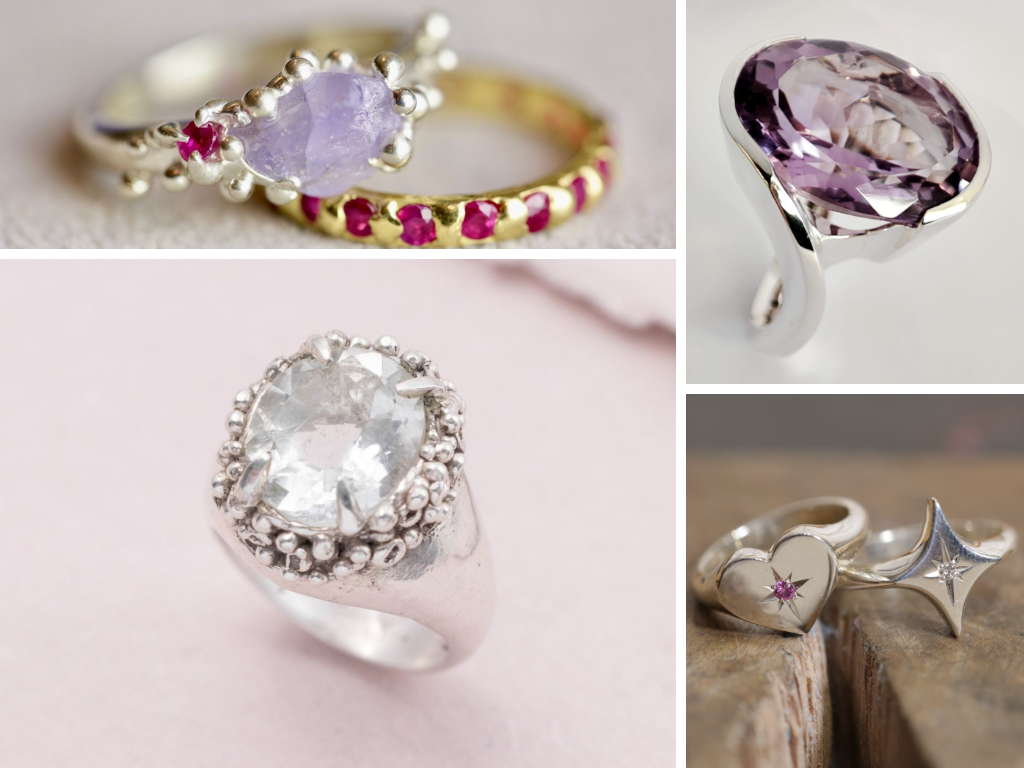
Jewellery all made from wax. Top right and top left were made by Jane Taylor. These are all projects from the online Diploma in Wax Jewellery with Jewellers Academy
How long does it take to learn wax jewellery?
The encouraging answer from Jane was: not as long as you might think.
Wax jewellery is often quicker to get started with than people expect. There are simple techniques you can begin with straight away, and then more advanced methods such as carving, build-up and cast-in-place can be explored as your confidence grows.
Like any jewellery skill, confidence comes with practice. But wax can offer a faster learning curve because it is relatively forgiving, affordable to experiment with, and easy to shape compared with metal.
That makes it especially appealing for beginners who want to start creating pieces quickly while also learning about design, finishing and casting.
How does lost wax casting work?
A big part of the session focused on helping people understand the casting process.
In simple terms, lost wax casting means that your wax model is used to create a metal version of the piece. The wax itself does not survive the process. It is burned out and replaced by molten metal.
If you want to reproduce the same design multiple times, a mould can be made from your original wax or master model. That mould can then be used to create fresh wax copies, which are cast whenever you need them.
This is one of the reasons wax is so valuable for jewellers who want to develop collections. A single design can become a ring, pendant, charm or earring, and can be repeated in different stones, finishes or metal types.
You can watch a video showing the process here: https://www.youtube.com/watch?v=GWVli5iY8BI
How much does wax casting cost?
Cost is one of the most common questions around wax jewellery, and Jess shared a useful ballpark during the session.
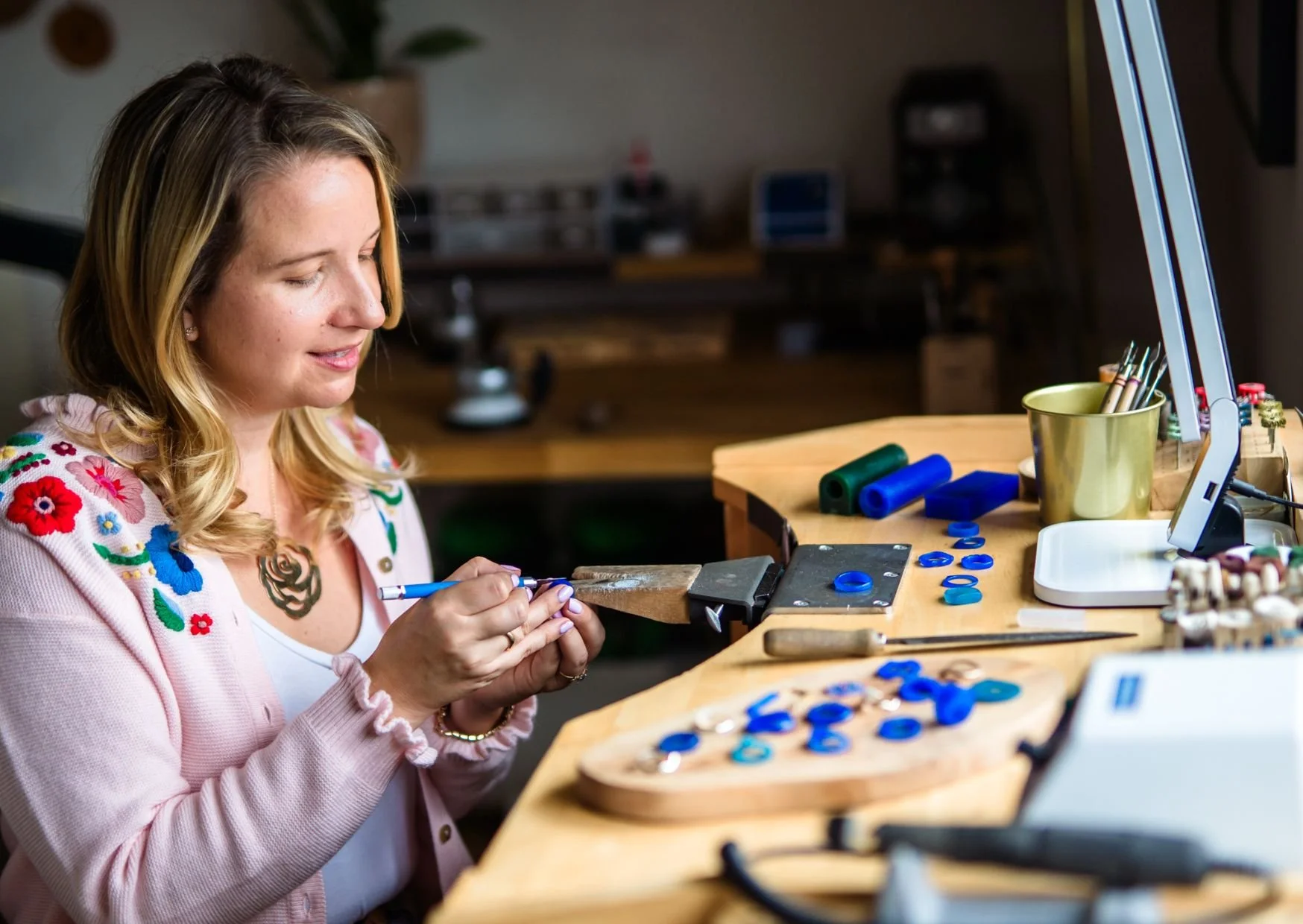
For a silver piece of around 7 grams, including the casting fee, postage and current metal prices, you may be looking at roughly £20 to £30 per piece. Jane also shared that a recent 10 gram silver piece cost her around £34, including hallmarking.
Of course, exact costs vary depending on:
the weight of the piece
the metal you choose
whether hallmarking is included
whether you need a mould made
whether you are casting stones in place
the pricing structure of your chosen caster
The key point is that wax jewellery can be budgeted for more easily than many people assume. By weighing your wax models before casting, you can make more informed pricing and design decisions.
Do you need to finish the metal yourself?
Not necessarily.
One of the most reassuring parts of the discussion was the reminder that jewellery making is often collaborative. You do not have to do every stage yourself in order to create beautiful work or run a successful jewellery business.
Some makers love the wax stage most and choose to outsource polishing, setting, finishing or hallmarking. Others prefer to do as much as possible in-house. There is no single right way.
As Jess pointed out, some jewellers eventually grow to the stage where they keep the wax design part for themselves and outsource the rest. That can be a smart way to focus on the part of the process you most enjoy.
Tips for preparing wax pieces for casting
The session was packed with practical tips for getting better casting results. Here are some of the most useful.
1.Refine your design in wax as much as possible
The more refined your wax is before casting, the less cleanup you will usually need to do afterwards. This is especially important for detailed or textured pieces where you do not want to sand away surface detail in metal.
2. Let the caster attach the sprues
One very useful tip from both Jess and Jane was to let the casting house add the sprues themselves. Most casters prefer to do this, and they know how to position them for the best result.
3. Package waxes carefully
Wax can be fragile, especially certain types used for more delicate techniques. Jane recommends packing wax pieces in a firm, non-crushable jewellery box with padding so nothing moves in transit. Bubble wrap can help, but the key is making sure the piece cannot rattle around.
4.Clean textured pieces gently
For textured waxes, Jane shared that she gives pieces a quick dip in the ultrasonic to remove white powder, being careful not to leave them in too long or let the liquid get too hot. This can help tidy the surface without damaging detail.
Can you work only in wax?
Yes, you can.
This was one of the early questions in the session, and the answer was clear: it is absolutely possible to build a jewellery practice focused mainly on wax. If you work with a good casting house and outsource finishing where needed, you can specialise in wax design.
That said, many jewellers use a combination of wax and traditional metalworking. They create in wax, then clean up, set stones and finish the piece in metal themselves.
Either approach can work. It depends on your skills, your business model and what parts of the process you most enjoy.
Is wax jewellery good for creating collections?
Very much so.
This was one of the most inspiring parts of the session. Jane explained how a single wax design can become the foundation for several pieces in a collection. One setting can be adapted into earrings, pendants, charms or rings. A single motif can appear in different sizes, with or without pearls, with different gemstones, or in different metals.
Wax makes it easier to think like a collection designer because you can explore shapes and repeatable elements in a flexible way.
If you are new to wax, Jess suggested starting by getting one or two pieces cast first so you can understand how your designs translate from wax to metal. Once you have that experience, it becomes much easier to build out a coherent range.
How thin can you go in wax?
Often thinner than you think.
Jane shared that in some cases wax can look almost see-through, yet still cast successfully into a solid metal result. That said, experience matters here. It helps to think of the wax as metal while you are designing, and to learn through practice what works well.
The general advice was that many beginners overestimate how thick wax needs to be. Seeing your first castings come back in metal is incredibly valuable because it teaches you what to expect in terms of weight, thickness and finish.
Common wax jewellery challenges and how to solve them
The Benchtips discussion also covered some of the most common issues jewellers run into when working with wax and castings.
Porosity in castings
If a casting comes back with tiny holes or pits, first work out whether the issue was in the wax model or whether it is a casting fault. Small imperfections can sometimes be burnished down and lightly sanded. Larger problems may require solder repair, adding metal, or returning the piece to the caster.
If the same issue appears repeatedly in the same design, it may be a sign that the original wax needs adjusting.
Joining wax securely
If you are attaching one wax element to another, do not just patch the surface. Jane advised making sure the wax becomes molten right through the join so both pieces truly fuse together. Then you can tidy and shape the surface afterwards.
A strong internal join is far more important than a neat surface join at the early stages.
Damage during clean-up
Anyone who has slipped with a flex shaft or polishing tool will understand this one. If a surface gets scratched or gouged during clean-up, the solution depends on the design. You may be able to disguise it with texture, solder a fix, add a setting, or redesign part of the piece.
Sometimes jewellery making is about creative problem solving as much as perfect execution.
Working in silver, bronze, gold and platinum
Another interesting topic in the session was metal choice.
While some jewellers are experimenting more with bronze and brass due to rising precious metal prices, Jane’s view was that you should make your work in the metal that feels right for the piece. If the design belongs in silver, there is still a strong market for silver jewellery.
The discussion also touched on:
silver casting as a popular and versatile option
bronze and brass as beautiful choices when suited to the design
gold casting as a way to reduce waste on more expensive pieces
platinum casting as possible, but more technically demanding
Jane also shared her preference for stain-free silver, which reduces deep firestain and makes clean-up much easier.
Choosing a jewellery caster
Choosing the right caster is an important step in your wax jewellery journey.
Jane shared that she has worked with Weston Beamor for over 20 years and values their reliability and helpful service. Jess also mentioned several other casting companies jewellers may explore, noting that experiences can vary and that building a relationship with a good caster really matters.
The takeaway was simple: try a few, ask questions, get quotes, and find the casting house that fits your needs, your designs and your stage of business.
Final advice for starting your wax jewellery journey
Jane’s closing advice was one of the best moments of the session:
Don’t be afraid of it. Just go for it.
Wax jewellery offers freedom, creativity and the chance to explore ideas in a different way. It can be detailed, playful, sculptural, commercial and deeply satisfying to work with. It is also a skill that grows with you, whether you want to create one-off pieces, build collections or develop a jewellery business around your designs.
If you have been curious about wax carving, wax casting or wax jewellery making, this is your sign to give it a go.
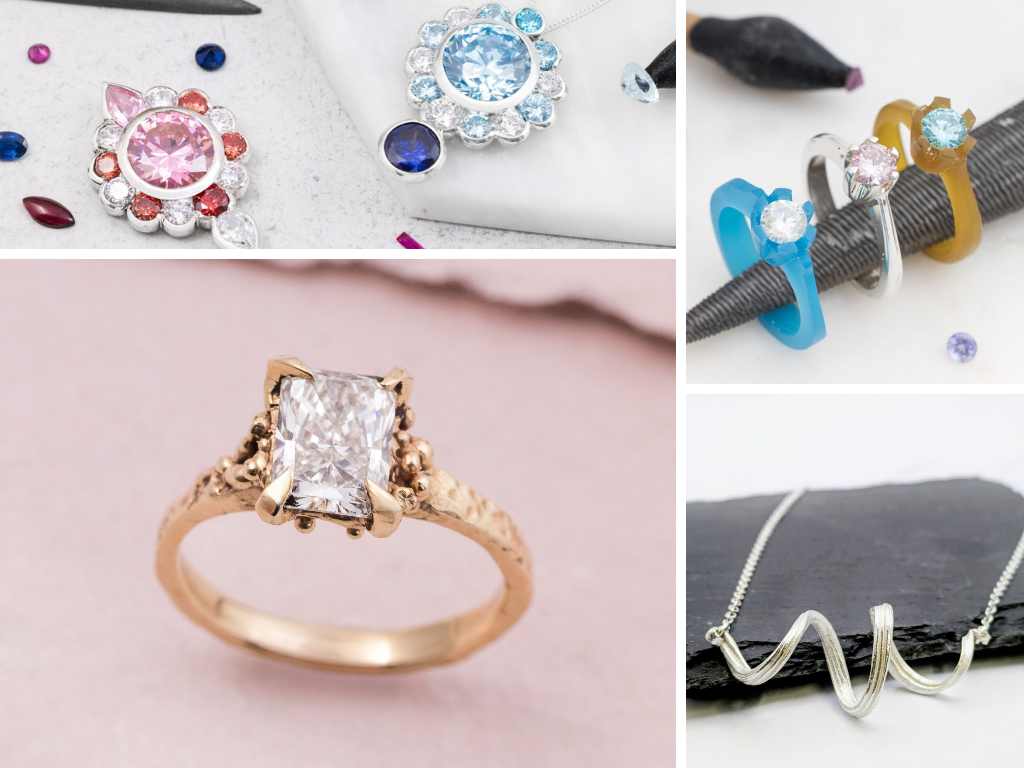
Above, projects from the Diploma in Wax Jewellery with Jewellers Academy
Want to learn more about wax jewellery?
At Jewellers Academy, we offer a range of online wax jewellery courses, including our in-depth Diploma in Wax Jewellery.
If you’re ready to take your wax jewellery skills further, our Diploma in Wax Jewellery at Jewellers Academy is designed to guide you step by step from beginner to confident maker. Over the course of a year, you’ll learn how to design and carve in wax, understand the casting process, refine and finish your pieces in metal, and develop collections you can be proud of. You’ll be supported by expert tutors (including Jane Taylor), with structured projects, feedback and a community of fellow jewellers learning alongside you.
Ready to start your wax jewellery journey? Explore the Diploma and see if it’s the right next step for you
More Questions from the Live Wax Jewellery Q&A
We had so many brilliant questions during this Benchtips session that we could not quite get through all of them live. Here are a few extra answers to some of the questions that came up in the chat.
Do I need a separate workstation for wax work?
Not necessarily, but it can make life easier. Wax carving can create a surprising amount of dust, especially if you are sawing, filing or using rotary tools, so it is helpful to have a dedicated area, a tray, or at least a good clear-up routine. You do not need an entirely separate studio setup, but it is worth keeping your wax work and metalwork organised so you are not constantly mixing dust, tools and offcuts.
Are jewellery waxes biodegradable?
Generally speaking, no, or at least not in a way that makes them ideal for outdoor use. Most jewellery waxes are petroleum-based or synthetic, so while a few tiny scraps are not likely to cause a disaster, they are not something you would want blowing around the garden or working into the soil. If you like the idea of carving outside, it is much better to work over a tray, cloth or bench mat so you can catch the dust and dispose of it properly afterwards.
Is Argentium or stain-free silver recycled?
It can be, but it is not automatically recycled just because it is Argentium or stain-free. Those names refer to the alloy, not the source of the metal. Some suppliers offer recycled versions and some do not, so if recycled content matters to you, it is worth checking with your supplier or caster directly.
Is stain-free silver similar to Argentium?
Often, yes. “Stain-free silver” is sometimes used as a general description for silver alloys that are more resistant to firescale and tarnish, and Argentium is one of the best-known examples. That said, different casters may use slightly different alloys, so if you want to know exactly what you are getting, it is always worth asking.
Can you really put wax pieces in the ultrasonic before casting?
Very briefly, yes, but with care. The key thing mentioned in the session was that it should only be a quick dip, not a long clean, and the ultrasonic should not be too hot. It can help remove surface powder from some waxes, but as always with more delicate work, it is best to proceed cautiously and test what works for your particular pieces.
If I get a bronze ring cast and need to resize it afterwards, can I use silver paste to solder it?
This would not usually be the best option. Silver paste is designed for silver, so if you are resizing bronze you are dealing with different metals, different colour match issues and a repair that may be more visible than you want. In most cases, it is better to think about sizing at the wax or mould stage if possible, or use a repair method suited to bronze. If you know you will want a design in multiple sizes, it is worth planning that in from the beginning.
When making a setting in wax, how do you make sure it will still fit the stone after casting?
The best approach is to work from the exact measurements of the stone and check constantly as you go. Calipers are your friend here. Many jewellers also work with the actual stone, or a matching stone, so they can test the proportions throughout. It is worth remembering that a cast piece will still need cleanup and finishing in metal, so the aim is accuracy with a little room for refinement, rather than making the fit so tight that you have nowhere to go afterwards.
If you make claws in wax, how do you make sure they will not break when you pop the stone out?
Usually by leaving them a little more substantial than you think you need. One of the common surprises with wax is that fine details can look thicker than expected at the carving stage and then make much more sense once cast. Claws need enough material to survive casting, cleanup and setting, so it is often better to leave yourself some strength and refine them later in metal rather than trying to make them look completely finished in wax.
What is gold wax for?
Gold wax is simply another type of jewellery wax. The colour does not mean it is specifically for making gold jewellery. Different coloured waxes tend to have different properties such as hardness, flexibility or how they carve, so some people prefer one over another depending on the technique they are using. The best way to understand the difference is really to try a few and see which suits your way of working.
Are there any no-nos when designing in wax?
A few, yes. Very weak joins, overly thin unsupported areas, and anything likely to snap in transit are worth watching out for. It is also important to think ahead about cleanup, where a sprue might go, whether a shape will cast cleanly, and whether very delicate details are realistic for the size of the piece. Wax gives you lots of freedom, but the strongest designs are the ones that balance creativity with practical thinking.
What is the best stone setting for raw gemstones?
Because raw gemstones are so irregular, there is no single answer, but bezel-style settings and custom claw settings are often a good place to start. A rub-over or bezel can give a nice secure hold, while claws can work beautifully if the stone has enough shape and structure to catch onto. The main thing with raw stones is to build the setting around the actual gem, because unlike calibrated stones, each one is unique.