
How to Take Your Stone Setting Skills to the Next Level with iain sainsbury (podcast episode)
In this episode of the Jewellers Academy podcast, Jess is joined by jeweller and mentor Iain Sainsbury to discuss how to take your stone setting skills to the next level. They talk through the three advanced stone setting Masterclasses, covering Decorative Collets, Fishtail Setting and Tiara Wedding Bands. Iain shares his experience of completing the courses himself and explains how the techniques have strengthened both his confidence and his jewellery making. They also discuss why advanced skills take practice, why getting things wrong is part of the learning process, and how repetition builds real technical ability.

LISTEN NOW
Want to listen on the go? Find the podcast here:
Once you have learned the foundations of stone setting, there is a whole new level of jewellery making waiting for you.
You might already feel confident creating a bezel or collet setting, setting a cabochon, making a claw setting or adding several stones to a piece. But perhaps you have started looking at more intricate fine jewellery and wondering: How did they actually make that?
That is often the point where advanced stone setting becomes exciting.
In this episode of the Jewellers Academy podcast, Jess is joined by jeweller and Jewellers Academy mentor Iain Sainsbury to talk about developing your stone setting skills beyond the basics. Iain has completed all three of the Jewellers Academy advanced stone setting Masterclasses himself and now supports other jewellers going through the programme.
Together, they explore what happens when you begin learning more complex jewellery construction and stone setting techniques, why advanced jewellery making requires a different approach to learning, and how adding new technical skills can transform both your confidence and the jewellery you create.
Moving beyond basic stone setting
Learning stone setting is rarely a case of mastering one technique and being finished. Instead, every new skill becomes part of an expanding toolkit that you can draw on when designing and making jewellery.
As Iain describes it, you gradually develop an “inventory of techniques”.
Perhaps you already know how to make a basic claw setting or rub-over setting. Advanced jewellery making begins when you learn how to adapt, combine and refine those techniques to create more unusual and technically demanding pieces.
This becomes particularly valuable if you make bespoke jewellery or take on commissions. Customers will inevitably ask for things you have never made before. Having a broader technical foundation means you can look at a design and think, I have done something similar to that. I know where to start.
You may still need to revisit a technique or practise before making the final piece, but you are no longer starting from zero.
That confidence can make an enormous difference.
Advanced stone setting is also about jewellery construction
One of the interesting things about advanced stone setting is that it is not only about physically setting the stone.
There is often a significant amount of jewellery construction involved before you ever reach that stage.
You may need to create intricate settings, work with extremely precise measurements, pierce detailed patterns, construct complex underbezels or prepare multiple components that eventually come together around a gemstone.
The setting itself becomes part of the overall design.
This is particularly evident in decorative collets. A traditional collet or bezel setting primarily exists to hold and protect the stone. With a decorative collet, the setting becomes a feature of the jewellery in its own right.
That might involve pierced patterns, geometric shapes, domed forms or highly precise saw work.
Learning to create pieces like this develops far more than one specific technique. It improves your measuring, marking out, piercing, construction and understanding of three-dimensional forms.
Even if you never recreate the exact project again, those skills return to the bench with you.
Why challenging projects improve your jewellery making
There is another benefit to tackling technically difficult jewellery projects: they change your perception of what you are capable of making.
If you complete a project with twenty or thirty different stages, your everyday jewellery making can suddenly feel more manageable.
You have already worked through the process of measuring accurately, solving problems, correcting mistakes and completing something that once looked impossible.
That experience builds genuine technical confidence.
It also gives you new ideas.
You might learn a piercing technique while making a decorative collet and later use a variation of it on an entirely different piece of jewellery. You may learn how to construct a complex setting and then simplify that construction for your own collection.
Advanced training does not mean you have to start designing jewellery that looks exactly like the course projects.
The value comes from understanding how those pieces are made and then applying that knowledge to your own style.
Learning decorative collets
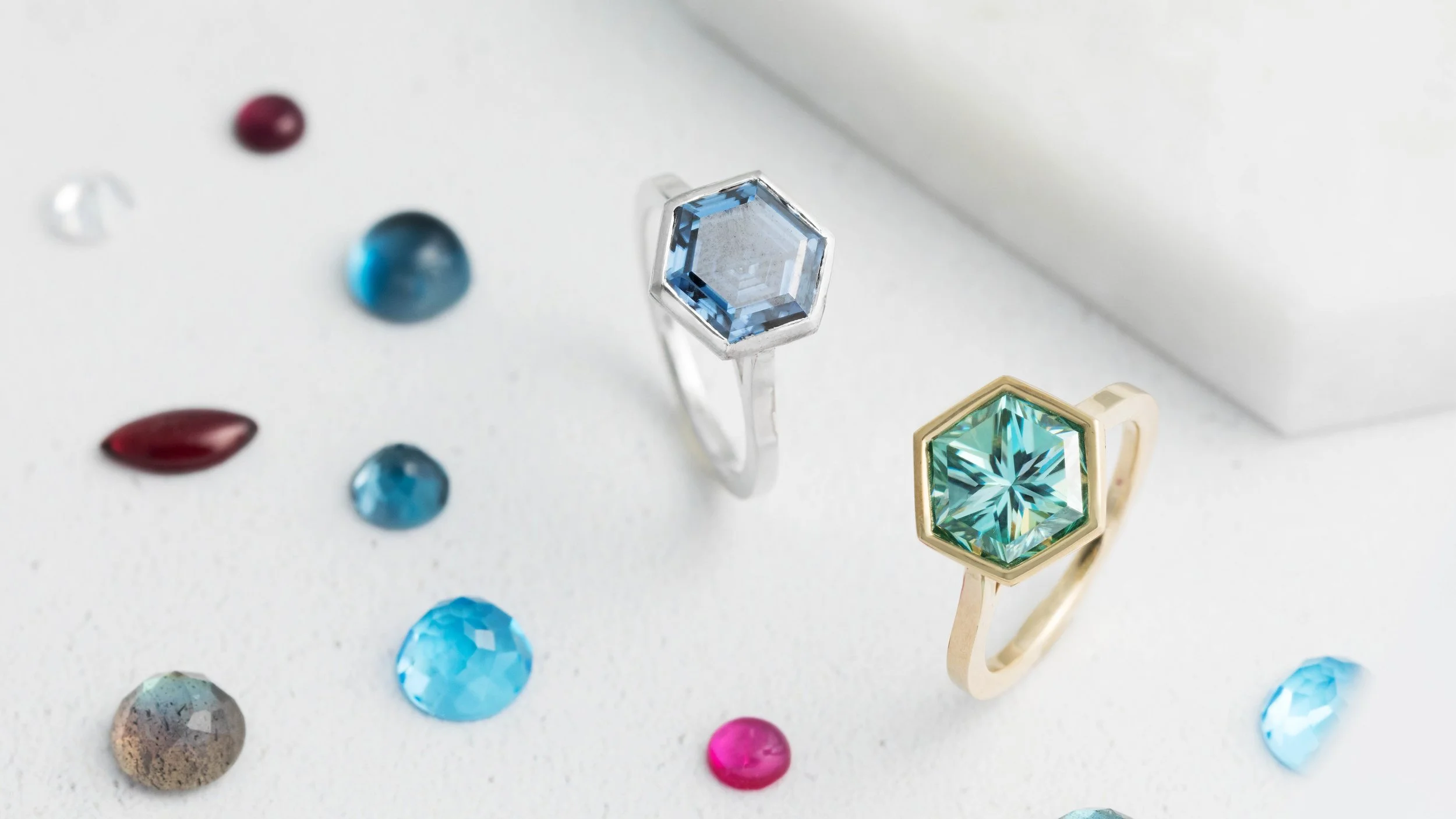
The first of the Jewellers Academy stone setting Masterclasses focuses on Decorative Collets with jeweller Anelia Caprina.
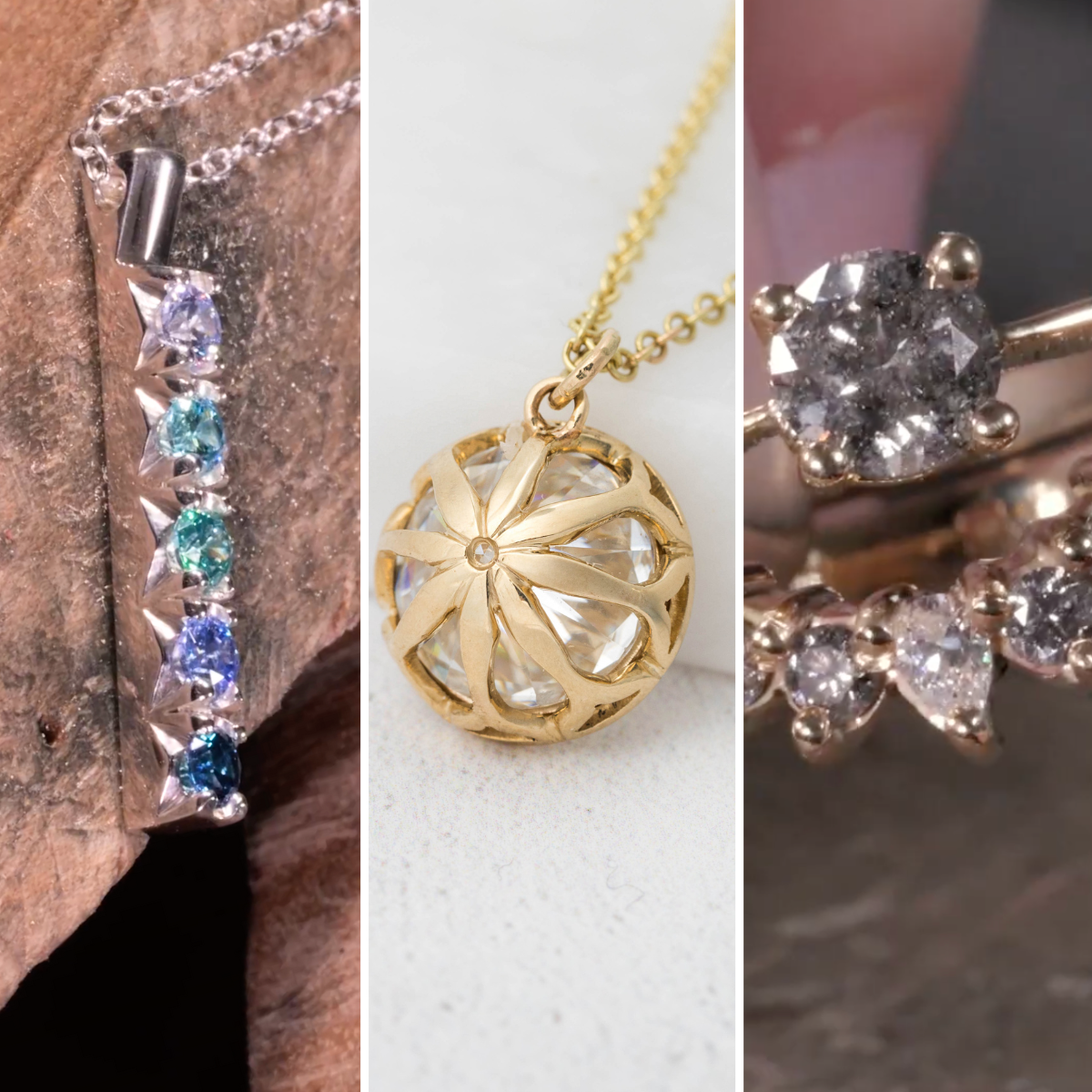
The projects include a hexagonal ring, marquise earrings and an intricate domed pendant.
These pieces require extremely accurate measuring, marking and piercing. The domed pendant is particularly interesting because the design must be marked out after the metal has been formed into a dome.
Suddenly, something that is relatively straightforward on a flat sheet of metal becomes a three-dimensional challenge.
You need to think about symmetry, spacing and how the design moves around the curved surface.
As Iain explains in the episode, completing a piece like this gives you a real sense of achievement. More importantly, it develops techniques that can then be incorporated into completely different pieces of jewellery.
Developing fishtail and pavé setting skills
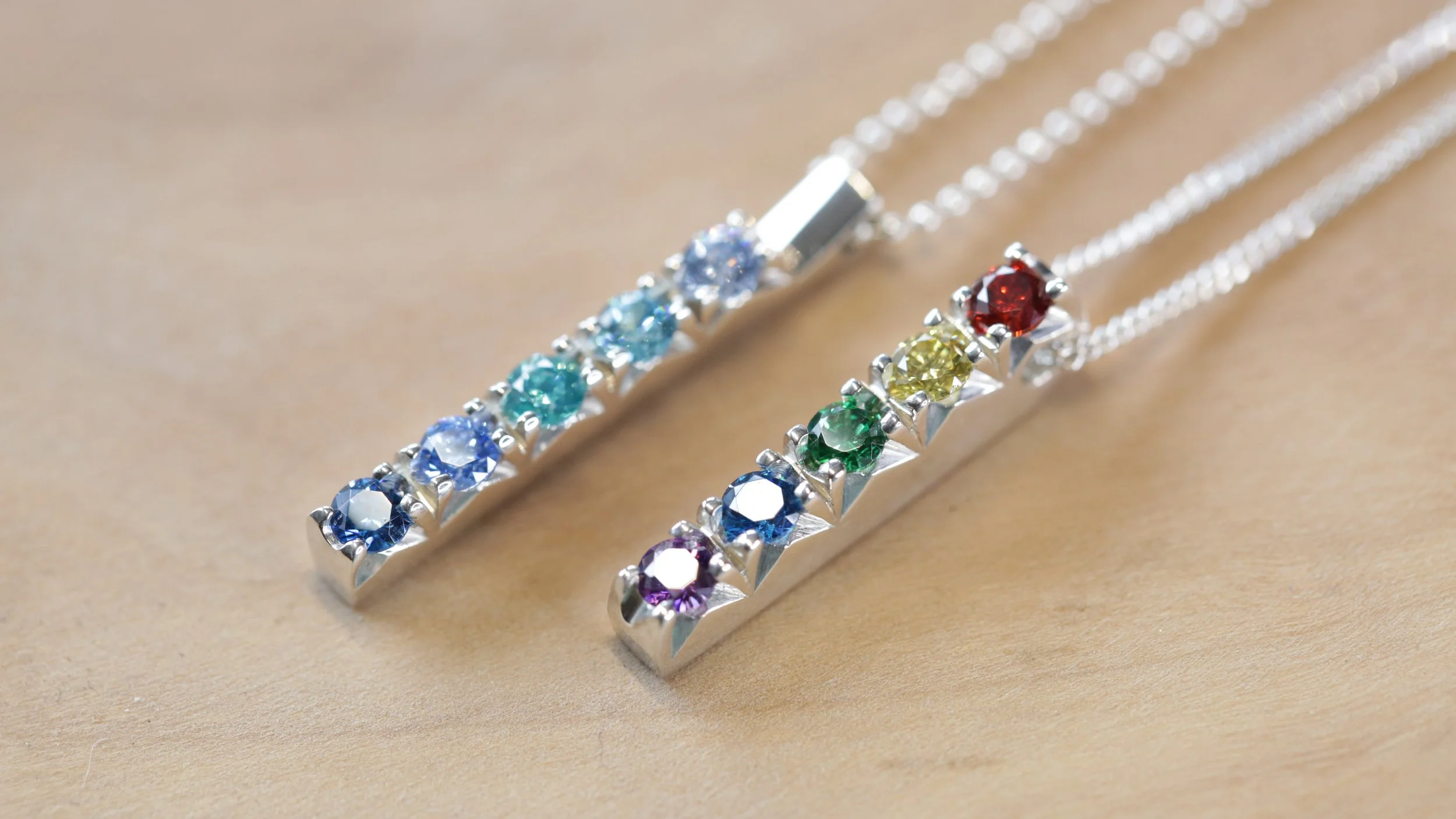
The second Masterclass focuses on fishtail setting with stone setter Scott McIntyre.
Fishtail setting develops some of the principles used in pavé setting, adding carefully cut decorative surfaces around the stones.
These additional facets reflect light and can create the highly refined finish often seen in fine jewellery.
The course is taught using traditional hand-pushed gravers rather than relying on pneumatic tools.
That makes the technique much more accessible if you do not yet have specialist stone setting equipment such as air tools or a microscope.
It also gives you the opportunity to understand how the metal feels as you cut it.
There is something very valuable about learning that physical relationship with your tools before introducing powered equipment.
For some jewellers, learning techniques such as fishtail and pavé setting becomes the start of a much deeper interest in professional stone setting. For others, it simply becomes another skill they can call upon when a design or commission requires it.
Both are equally valuable outcomes.
Making tiara wedding bands
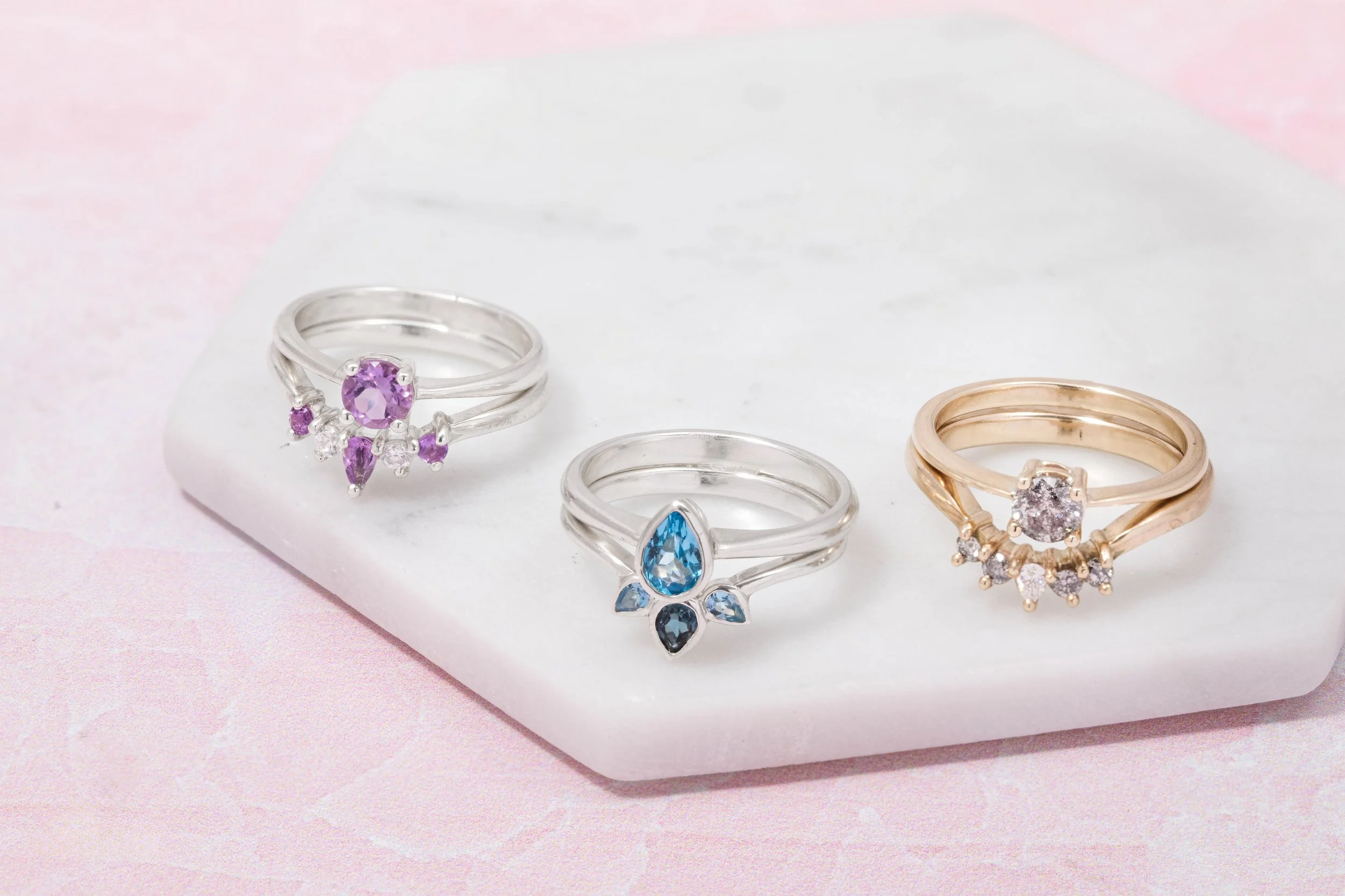
The third Masterclass, taught by April Dace, focuses on Tiara Wedding Bands.
If you make bridal jewellery, this is the kind of construction you are likely to encounter sooner or later.
Tiara-style wedding rings are often designed to fit around an engagement ring, which means they need to combine accurate construction with delicate stone settings.
April teaches the entire process in detail, from preparing the metal and constructing the ring through to creating and setting the individual components.
These are small, precise pieces, so magnification is useful and patience is essential.
The finished result, however, is a highly professional piece of jewellery that can be adapted in numerous ways for bridal commissions.
You can alter the width of the band, change the scale of the stones or adapt the arrangement to suit an existing engagement ring.
That makes the technique both creatively interesting and commercially useful.
You are not supposed to get advanced jewellery making right the first time
Perhaps one of the most important conversations in this episode is about something that happens away from the technical details: the expectation that we should immediately be good at something because we are already experienced jewellers.
When you are a beginner, you expect to make mistakes.
As you become more experienced, it can become surprisingly uncomfortable to feel like a beginner again.
But advanced jewellery making has more stages, more variables and more opportunities for something to go wrong.
If a project involves thirty different steps, you might complete twenty-five of them perfectly and still have five that need more practice.
That does not mean the project has failed.
Those five stages are the learning.
Jess compares it to watching her son learn to ride a bike. At first, he expected to be able to do it because he had seen other people riding bikes. In reality, learning involved frustration, repetition and several attempts before suddenly it became something he could simply do.
Jewellery making works in exactly the same way.
The first version of a piece might not work at all. The second might be much better. By the fourth or fifth attempt, your hands understand things that previously required enormous concentration.
That repetition is what builds technical skill.
Give yourself permission to practise
This is particularly important when working on advanced stone setting projects.
Do not put pressure on yourself to make the perfect piece immediately.
Practise in silver before moving into gold. Repeat individual techniques. Allow yourself to make test pieces. If something goes wrong, work out why before starting again.
You are not wasting metal or time.
You are building the physical knowledge required to make something reliably.
Jewellery making is a practical skill. Watching someone demonstrate a technique can show you what to do, but your own hands still need to learn how to do it.
That only comes through practice.
Why detailed jewellery making courses matter at an advanced level
Another challenge with learning advanced jewellery making is finding sufficiently detailed tuition.
Once techniques become more complex, abbreviated demonstrations can leave major gaps.
An experienced jeweller may instinctively know how to hold a piece, where to place a solder join or how much pressure to apply with a graver. They may not even realise those are decisions they are making.
But if you are learning the technique for the first time, those details matter.
A skipped step can be the difference between completing a piece successfully and spending several hours trying to understand why something has gone wrong.
That is why the Jewellers Academy Masterclasses have been filmed in significant depth.
The aim is to create the feeling that you are standing beside the tutor at the bench, seeing the full process rather than simply watching the highlights.
For complex pieces that may take several days to complete, that level of detail becomes particularly valuable.
Learning advanced jewellery making in a community
Advanced jewellery making can also be surprisingly isolating.
You might spend an entire day working on a tiny section of one piece of jewellery. Something goes wrong and suddenly you are sitting alone at your bench wondering whether anyone else has ever encountered the same problem.
That is where learning alongside other jewellers becomes powerful.
Students on the Jewellers Academy Masterclasses have access to a private Facebook community where they can share progress, ask questions and learn from one another.
Iain encourages students not to use the group purely for finished-piece photographs.
Showing the difficult stages can be much more useful.
You might share something that has gone wrong and discover that several other jewellers encountered exactly the same problem. Someone else may have found a solution. Or perhaps you have developed your own way of approaching the technique that could help somebody else.
It creates a community of jewellers working at a similar technical level.
And because everyone in the group already has experience of stone setting, conversations can go much deeper than they might in a more general jewellery-making community.
Take your stone setting skills at your own pace
One of the changes to the Jewellers Academy Masterclass programme this year is that students receive immediate access to all three advanced stone setting Masterclasses when they enrol.
Previously, the courses were released throughout the year.
Now you can decide how you want to approach them.
If you are excited to immerse yourself in stone setting, you can begin immediately and work through the courses in succession.
If your jewellery business is extremely busy in the run-up to Christmas, you can enrol now and begin properly in January.
You can also choose which Masterclass you want to start with.
The courses were originally designed to take roughly three months each, but there is no requirement to complete them within that timeframe.
Some jewellers will move more quickly. Others will take much longer.
And because you receive lifetime access, you can return to the lessons whenever you need them.
That becomes particularly useful when a commission appears six months or two years later and you suddenly think, I know I learned how to do this somewhere.
You can go back, revisit the technique and use it again.
Is advanced stone setting your next step?
If you already have a grounding in stone setting and you are looking for your next technical challenge, advanced stone setting can open up a completely new area of jewellery making.
You might want to create more complex commission pieces. You may be moving towards fine jewellery or bridal jewellery. Perhaps you simply love learning and want to discover what your hands are capable of.
Whatever your reason, the aim is not simply to complete three projects.
It is to become a more technically confident jeweller.
Every technique you learn gives you another option at the bench. Every difficult project teaches you something about construction, accuracy and problem solving. And every mistake you work through builds experience that you can take into the next piece you make.
The Jewellers Academy advanced stone setting Masterclasses are open for enrolment until 31st October 2026.
About iain
Iain Sainsbury is a British fine jewellery designer and goldsmith based in South Cambridgeshire, specialising in bespoke commissions and one-of-a-kind pieces. With a background in high-precision medical science and a PhD, as well as experience shaped by military discipline, Iain brings a meticulous approach to his jewellery making, combining traditional craftsmanship with contemporary design. His work focuses on ethical sourcing, using materials including recycled precious metals, Single Mine Origin gold and responsibly sourced gemstones, with a particular interest in sand casting, architectural forms and creating jewellery with personal meaning. Iain has exhibited at Goldsmiths North, Desire and Handmade Chelsea, and his ATOMIUM collection was shortlisted for the NAJ Collection of the Year 2025. He is also a Jewellers Academy mentor and tutor.
Instagram: @iains_jewellery