
What makes a jewellery business newsworthy? In this episode of the Jewellers Academy Podcast, Anna Campbell speaks to PR and visibility expert Amanda FitzGerald about finding the stories journalists want to hear. Discover how your personal journey, materials, creative process, customer stories and local connections can become compelling PR opportunities. Amanda also explains how to choose the right publication, write a concise press pitch and show why your story matters now. If you are launching a collection or building your profile, this episode will help you gain valuable press coverage and bring greater visibility to your jewellery business.

Listen now
Want to listen on the go? Find the podcast here:
You may have a beautiful jewellery collection, a carefully developed brand and a loyal group of customers but what would make a journalist want to write about your business?
The answer is rarely as simple as launching a new product.
Journalists are looking for stories that will interest their readers. That might be an unusual career change, the inspiration behind a collection, a meaningful customer commission or a fresh perspective on an issue affecting jewellery buyers.
In this episode of the Jewellers Academy Podcast, host Anna Campbell speaks to PR and visibility expert Amanda FitzGerald, also known as Major Visibility. Amanda helps business owners become more confident about self-promotion and gain recognition through press coverage, podcasts and speaking opportunities.
Drawing on her own experience in PR and the remarkable growth of her mother Janet Coles’ bead business, Amanda explains how jewellery makers can uncover the stories hiding inside their businesses and turn them into effective press pitches.
Why PR matters for a jewellery business
For many years, social media has dominated conversations about jewellery business marketing. Makers are often told they need to post constantly to remain visible.
Social media can be useful, but it is only one route to your audience.
Press coverage gives your jewellery brand something particularly valuable: third-party credibility. When a newspaper, magazine, podcast or trusted website features your business, somebody other than you is telling their audience that your work is worth noticing.
Good PR can help you:
Reach people outside your existing social media audience
Build trust in your jewellery brand
Establish yourself as an expert
Attract customers, stockists and collaborators
Create valuable online mentions and links
Develop a stronger digital footprint
Give prospective customers another reason to choose you
Online press coverage may also help search engines and AI-powered discovery tools understand what your business does. Clear, relevant mentions from reputable third-party sources can strengthen the signals surrounding your brand online.
A feature in a national publication might feel like the ultimate goal, but smaller opportunities matter too. A local newspaper, specialist magazine, trade publication or niche podcast may reach a more relevant audience—and can be an excellent place to begin.
Your new jewellery collection is not automatically news
Launching a collection is exciting for you and your customers, but the launch alone may not be enough to interest a journalist.
Before pitching it, ask:
Why would this matter to the publication’s audience, and why does it matter now?
Perhaps the collection is inspired by local archaeological discoveries. Maybe it uses reclaimed materials, responds to a cultural moment or solves a problem for a particular group of customers. That is where the potential story begins.
A journalist is not there to provide free advertising. Their job is to inform, entertain or inspire their audience. Your pitch therefore needs to offer more than “Here is my new collection.”
It needs an angle.
8 places to find a newsworthy story in your jewellery business
Jewellers often assume there is nothing particularly interesting about their work because the process has become familiar to them. Yet the details you take for granted may be exactly what captures a journalist’s attention.
Here are eight places to look for your story.
1. Your personal journey
How did you become a jeweller?
Many jewellery makers had an entirely different career before starting their businesses. You may have left a corporate role, changed direction after burnout, returned to creativity following a difficult experience or learned jewellery making during a major transition in your life.
That journey gives your work context.
A simple career-change story becomes more compelling when it reveals what changed, what jewellery making gave you and how that experience now influences your designs.
Do not assume your story is too ordinary. The question to ask is whether readers will recognise something of themselves in it.
2. The provenance of your materials
Amanda suggests remembering “P for provenance”: where did the materials come from, and what journey did they take before becoming a finished piece?
Consider:
Where your gemstones were sourced
Why you chose a particular metal
Whether you work with recycled or reclaimed materials
How you verify ethical or sustainable sourcing
Whether you collect materials yourself
Who makes the individual components
Whether a technique is connected to a particular place or tradition
Customers are not simply buying an object. They may also be buying its history, craftsmanship and meaning.
The same principle applies to product descriptions on your website. Instead of listing only the metal, gemstone and dimensions, explain the idea behind the piece. Those details could later become the “golden nuggets” in a press pitch.
3. An unusual material or process
Perhaps you make jewellery from sea glass gathered on a particular coastline, repurpose antique elements or transform inherited gold into contemporary designs.
Ask yourself:
What do I use that most jewellers do not?
Is there something distinctive about how I work?
Do I source, shape, cast or finish my pieces differently?
What lengths have I gone to in order to create a collection?
Even when other makers use the same material, your interpretation, process and design style can make the story distinctive.
4. Local history, architecture or landscape
A collection inspired by local heritage can be especially appealing to regional media.
Your designs might reference:
A historic building
Local archaeological finds
A distinctive coastline or landscape
Regional folklore
A traditional craft
A notable local person
The history of your town or neighbourhood
The more specific the connection, the easier it may be for a journalist to see why the story belongs in their publication.
A generic nature-inspired collection might not be news. A collection based on forms found at a newly opened local heritage site has a clearer angle and a stronger reason to be featured now.
5. A meaningful customer story
Jewellery frequently marks relationships, memories and important life events. That emotional significance can create a powerful human-interest story.
For example, you may have:
Remade a grandmother’s ring for a new generation
Combined pieces inherited from several family members
Created jewellery to commemorate a loved one
Designed a piece celebrating recovery or a major achievement
Restored an item with a remarkable history
With the customer’s clear consent, the story behind a commission can show both the emotional value of jewellery and the care involved in your process.
Programmes such as The Repair Shop demonstrate how powerfully people respond to treasured objects and family histories. The finished piece matters, but the human connection is what makes the audience care.
6. An unexpected niche
Do you create jewellery for a particular community or interest group?
Perhaps you make pieces for:
Runners
Outdoor swimmers
Gardeners
Musicians
Cyclists
People with sensitive skin
Customers with accessibility needs
People celebrating a particular cultural tradition
A defined niche opens the door to specialist publications, podcasts and shopping pages. Jewellery designed for swimmers, for example, may be relevant to outdoor swimming media as well as jewellery and lifestyle publications.
A focused pitch is often stronger than one aimed at everybody.
7. A timely cultural connection
Journalists need a reason to cover a story today rather than six months from now. This is known as the “why now?”
You could connect your work to:
A forthcoming film or book
A major exhibition
A national celebration
A royal or celebrity jewellery moment
A seasonal event
An awareness day
A current fashion or gemstone trend
A local festival or anniversary
The connection needs to be genuine. Avoid forcing your jewellery into an unrelated news story simply because it is popular.
Instead, look ahead. Editorial calendars are planned in advance, so identify relevant dates early and allow time to create the work, photograph it and approach journalists.
8. A local collaboration
Collaborating with other independent businesses can give everyone involved a stronger story.
A jeweller might work with a:
Florist
Ceramicist
Tattoo artist
Fashion designer
Bridal boutique
Hair stylist
Wedding venue
Photographer
Local gallery
You could create a joint collection, style a photo shoot, run an event or bring several creative businesses together for a special shopping experience.
Local media are often interested in independent businesses working together, particularly when the collaboration supports the high street or brings something new to the community.
Turn your knowledge into expert commentary
Your products are not your only PR opportunity. Your expertise may be equally valuable.
Journalists regularly need specialists who can explain trends, answer common questions or respond to a news story. As a jeweller, you might offer advice on:
Choosing jewellery for sensitive skin
Looking after engagement and wedding rings
Buying gemstones responsibly
Understanding recycled gold
Redesigning inherited jewellery
Selecting jewellery for an important occasion
Recognising quality craftsmanship
Deciding between mined and laboratory-grown diamonds
Protecting jewellery while travelling
Understanding a celebrity jewellery trend
This allows you to be featured as a knowledgeable jeweller even when you are not launching anything.
Pay attention to the questions customers ask repeatedly. Each one could become an expert article, interview or response to a journalist.
How to choose the right publication
Begin by identifying the media your ideal customers actually consume.
Amanda recommends asking them directly. A short customer survey could include questions such as:
Which magazines do you read?
Which newspapers or news websites do you follow?
What podcasts do you listen to?
Where do you look for fashion, lifestyle or gift recommendations?
Use the answers to create a focused media wish list.
Once you have chosen a publication, spend time reading it. Look at its regular sections, the types of businesses it features and the journalists who cover relevant subjects.
You are not simply pitching “a newspaper” or “a magazine”. You are pitching a particular person or section with a specific audience.
Follow relevant journalists and engage thoughtfully with their work. Familiarity with what they cover will help you send a more relevant pitch—and avoid approaching the wrong person.
How to pitch your jewellery story to a journalist
Do not write an entire article before a journalist has expressed interest. In most cases, your first job is to sell the idea.
Keep the initial email concise, ideally under 200 words, and make it easy to scan.
Your pitch should include:
A compelling email subject line
The central story in one or two sentences
Why it is relevant to the publication’s audience
Why the story is timely
A few useful facts or bullet points
A brief introduction to you and your business
A clear invitation to respond
Your contact information
If the jewellery itself is important to the story, place one or two small, low-resolution images within the email rather than attaching large files. Include the recommended retail price where relevant and state that high-resolution images are available on request.
Shopping editors often need clean cut-out photographs of products on a white background. It is helpful to have both cut-out images and styled or model photography ready before you begin pitching.
Write a subject line that earns attention
Journalists receive a huge number of emails. A vague subject line such as “Press release” gives them no reason to open yours.
A stronger subject line communicates the story immediately.
For example:
Former lawyer turns burnout recovery into calming jewellery collection
Local jeweller transforms three generations of family gold into one ring
Coastal designer creates sea-glass collection from storm-tossed finds
Jewellery collaboration brings new creative event to the high street
Outdoor swimmer designs jewellery made for life in the water
These examples work because they contain a person, point of difference or clear piece of news.
Should you follow up with a journalist?
Yes but keep your follow-up polite and concise.
Amanda suggests following up in three stages, leaving approximately three days between each message. If the first subject line did not attract attention, consider changing it on a later attempt.
A lack of response does not always mean the story is unsuitable. The journalist may be working to a deadline, away from the office or saving the idea for later.
After several attempts, leave that pitch and move on. You can approach the journalist again when you have another genuinely relevant idea.
Do not overlook local, niche and online press
National coverage can be exciting, but smaller publications may offer greater relevance.
A local newspaper might be interested in your unusual career change, your connection to the area or a collaboration with other independent businesses. A specialist publication may reach exactly the kind of customer your jewellery was designed for.
PR opportunities can include:
Newspapers and magazines
Online publications
Trade and specialist media
Local radio
Television
Podcasts
Newsletters
Blogs and Substacks
When appearing on a podcast, ask the host to include a clear description of who you are and what your business does in the episode notes, along with a link to your website. This makes it easier for listeners—and online discovery tools—to find you afterwards.
How one piece of press can transform a business
Amanda’s understanding of PR began with her mother, Janet Coles, who became known as the “Queen Bead” in the 1990s.
Janet developed a mail-order bead business that began with a simple A4 sheet of hand-drawn products and grew into a glossy 112-page catalogue. Her beads were sourced from around the world, and the family business attracted extensive media coverage.
The story was not simply that Janet sold beads. Journalists could write about her travels, the provenance of the products, the growth of a family-run company and the moment of inspiration that began in a Paris bead shop.
One letter to the Daily Mail led to coverage and an extraordinary response: sacks of postal orders arrived requesting the catalogue. Press features, fashion shoots and product placements helped the business expand far beyond its small beginnings.
Although the media landscape has changed, the central lesson remains the same: a strong story can introduce your work to people who would never otherwise discover it.
Your first jewellery PR task
If you have never approached the press, take these four steps this week:
Ask your customers what they read, watch and listen to.
Use their answers to choose one relevant publication, programme or podcast.Study that outlet.
Identify the section and journalist most likely to cover your subject.List three potential stories from your business.
Look at your personal journey, materials, customers, expertise, local connections and unusual processes.Find the “why now?”
Connect your strongest idea to a relevant date, event, trend or piece of news.
Then write a pitch of fewer than 200 words.
You do not need to wait until you feel important enough for publicity. Your first opportunity may come from a village magazine, local radio programme or specialist website rather than a national newspaper—and that is still valuable progress.
Your jewellery business already contains stories
If your first thought is, “Why would anybody be interested in me?”, turn the question around: why wouldn’t they be?
Every piece of handmade jewellery has a journey. There is a reason you designed it, a process behind its creation and a person who will give it meaning. Your job is to recognise which details will matter to somebody beyond your business.
Look at where you came from, what you believe in, how you make your work and the people you make it for. Find the human connection, identify why it matters now and share it with the publication whose audience is most likely to care.
If you do not tell people what makes your jewellery business remarkable, they may never have the opportunity to discover it.

about amanda
Amanda FitzGerald, also known as Major Visibility, is a PR and visibility expert who helps business owners get seen, heard and recognised. She supports entrepreneurs in building their profiles through press coverage, podcasts and speaking opportunities, with a particular passion for helping women become more confident about self-promotion.
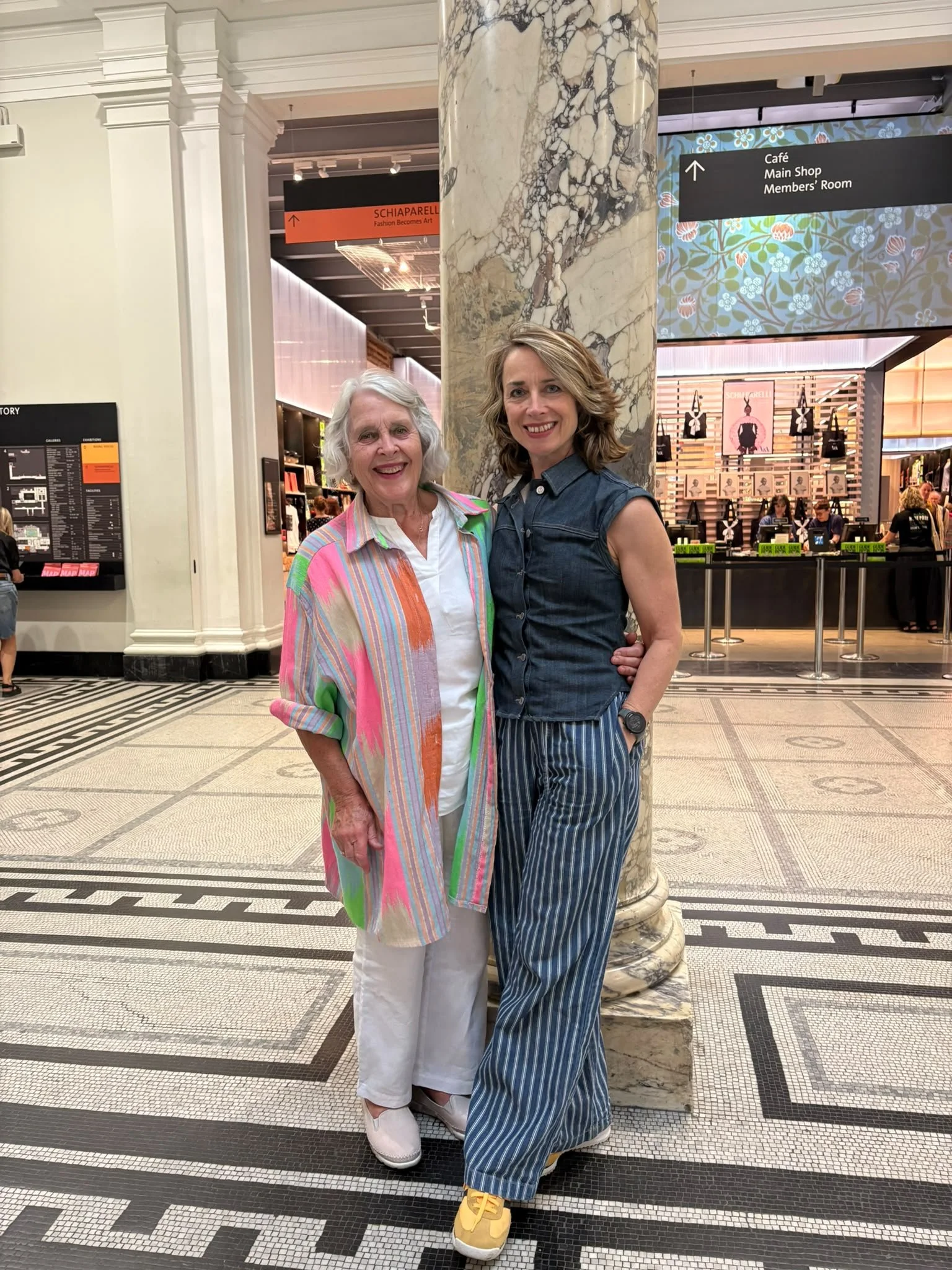
Amanda and her mother, Janet Coles whose jewellery business was mentioned in the episode.