
In this episode of the Jewellers Academy podcast, Jessica Rose shares what she has learnt from launching her own jewellery business, Jessica Rose Jewellery. From deciding what to make and building a cohesive collection to investing in materials, photography and a website, Jess talks openly about the practical realities of starting again. She also explores the self-doubt that can come with putting your work into the world and the importance of developing a style that feels like your own. Along the way, there were broken stones, design decisions, branding choices and plenty of lessons about keeping things simple. Jess also explains why launching your jewellery business is only the beginning, rather than the moment everything suddenly takes off. For anyone starting a jewellery business or preparing to launch your first collection, this episode is packed with useful, reassuring insights from the process.

Jewellery photos in this blog post are all Jessica Rose Jewellery designs, copyright Jessica Rose
LISTEN NOW
Want to listen on the go? Find the podcast here:
What does it really take to launch your own jewellery business?
After years of helping other jewellers learn new skills, develop collections and grow profitable jewellery businesses through Jewellers Academy, Jessica Rose has launched a new jewellery brand of her own: Jessica Rose Jewellery.
It has been around 20 years since Jess first ran a jewellery business. Her original brand, Brown Lily, sold jewellery through markets, fairs, shops, galleries and an early website, before her love of teaching led her to start the London Jewellery School and, eventually, Jewellers Academy.
Jewellers Academy remains very much her main focus. But over the past few years, Jess found herself increasingly drawn back to the bench. She began doing more jewellery training, exploring wax carving and stone setting, collecting gemstones and, eventually, creating a complete collection.
In this episode of the Jewellers Academy podcast, Jess shares what she has learnt from launching a jewellery business again - from choosing what to make and investing in materials to photography, branding, websites and dealing with the inevitable self-doubt.
For anyone starting a jewellery business, thinking about launching your first collection or wondering how to turn your jewellery-making skills into something more commercial, here are ten lessons from Jess’s experience.
1. Start with what you genuinely love making
One of the biggest challenges when starting a jewellery business is deciding what to make.
The more jewellery-making skills you develop, the harder this can become. You might love stone setting, wax carving, traditional silversmithing, fine jewellery, metal clay and a dozen other techniques. Learning everything is exciting, but a jewellery collection usually needs more focus.
For Jess, the answer was to begin with creativity rather than commerce. Instead of asking, “What jewellery business should I start?”, she began by asking what she actually wanted to make.
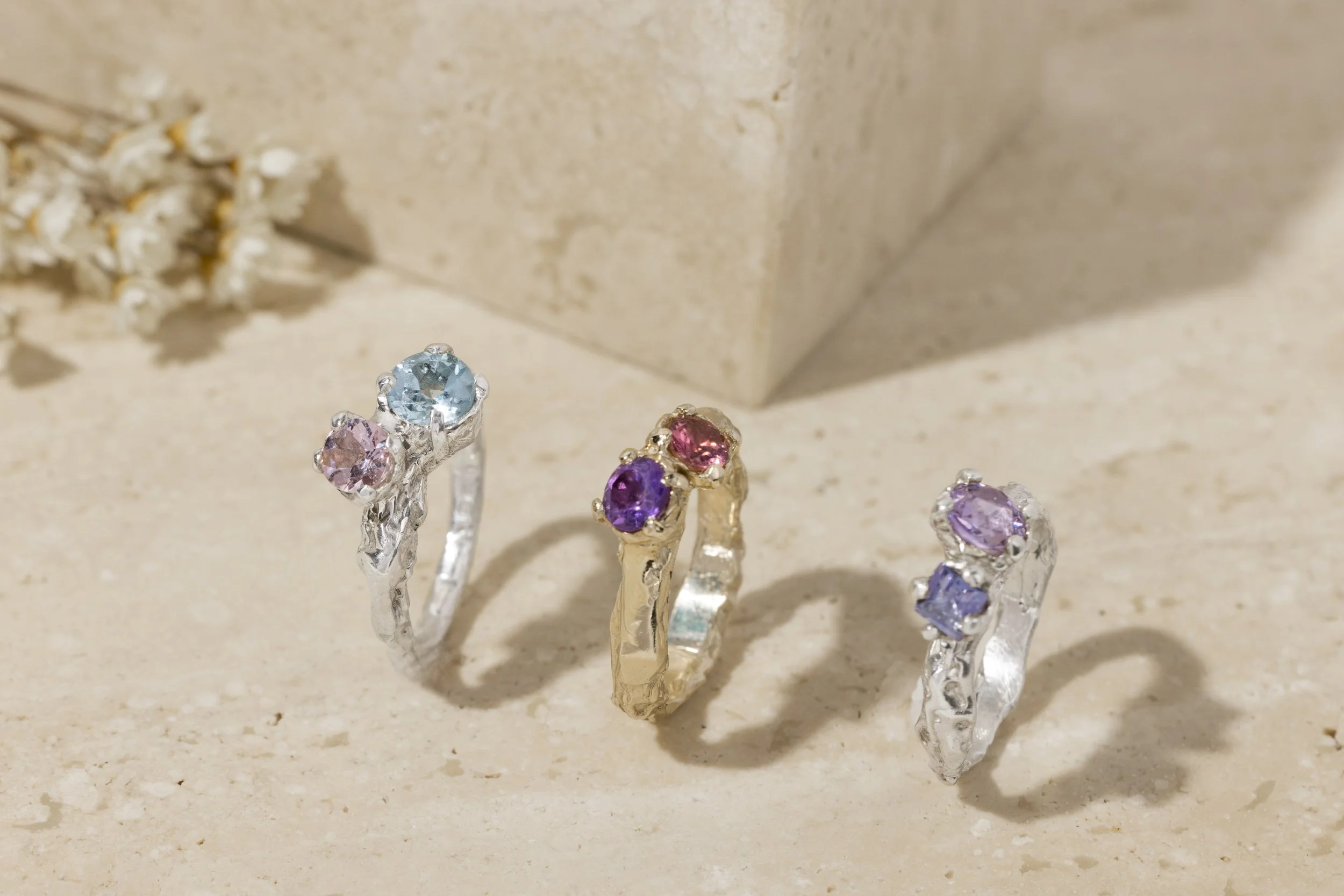
That led her towards organic fine jewellery created initially in wax, particularly using wax build-up techniques, before casting and adding gemstones through a range of stone-setting techniques. It brought together several things she already loved: wax, gemstones, colour and stone setting.
That enthusiasm matters. When somebody orders one of Jess’s pieces, she isn't only excited to have made a sale - she is excited that she gets to make another piece.
When you are choosing the direction for your own jewellery business, pay attention to the techniques, materials and designs that make you want to get back to the bench. A strong jewellery brand doesn't have to begin with identifying what you think will sell most easily. It can begin with developing a recognisable body of work around something you genuinely enjoy making.
2. Your jewellery business does not have to grow quickly
We hear a lot about moving quickly in business. Set the goal. Pick the launch date. Get the website live.
There can absolutely be value in deadlines, particularly if you are relying on your jewellery business to generate income. But Jess’s experience with this launch has been very different. The collection developed slowly. She had another business to run and a family, and this project wasn't something that needed to generate an immediate income. That meant she could allow herself to experiment without putting pressure on the outcome.
Sometimes weeks passed without her making anything. Then she would find an hour on a Sunday afternoon and return to the bench.
Slow progress was still progress. There is no single correct timeline for starting a jewellery business. Your circumstances, financial needs, commitments and goals will all affect how quickly you need or want to move. The important thing is to keep moving in a way that is sustainable for you.
3. At some point, you have to be willing to invest
One of the realities of running a jewellery business is that making jewellery costs money before it makes money. That is particularly true when working with gold and gemstones, but even silver jewellery requires a significant materials investment.
Jess describes having to build the confidence to spend money on materials, training and creating the collection without knowing exactly when, or whether, that investment would come back. That gap between spending the money and receiving money can feel uncomfortable. You may need to pay for precious metals, gemstones, casting, hallmarking, tools, photography, packaging and your website long before a customer buys anything. And with higher-priced jewellery, customers may understandably take longer to make a purchasing decision.
Jess's approach has been to accept that the return does not necessarily happen immediately. The skills, experience and collection she has created are also part of the investment. Launching a jewellery collection involves a degree of uncertainty. You cannot know exactly which pieces will sell or when. You can make sensible financial decisions, start at a scale you can afford and recognise that investing in your business is part of building it.
4. A collection tells people what kind of jeweller you are
Jess recommends launching a jewellery business with a collection, even if collections are not going to be your long-term business model. Why? Because a collection gives potential customers somewhere to begin.
It says:
This is my style.
This is what I make.
This is what I am interested in.
This is the kind of commission you could approach me about.
As jewellers, we often know that we could make hundreds of different things. Your customer doesn't know that. Without examples of your work, asking somebody to commission a piece can leave them facing a completely blank page. A jewellery collection creates a visual starting point.
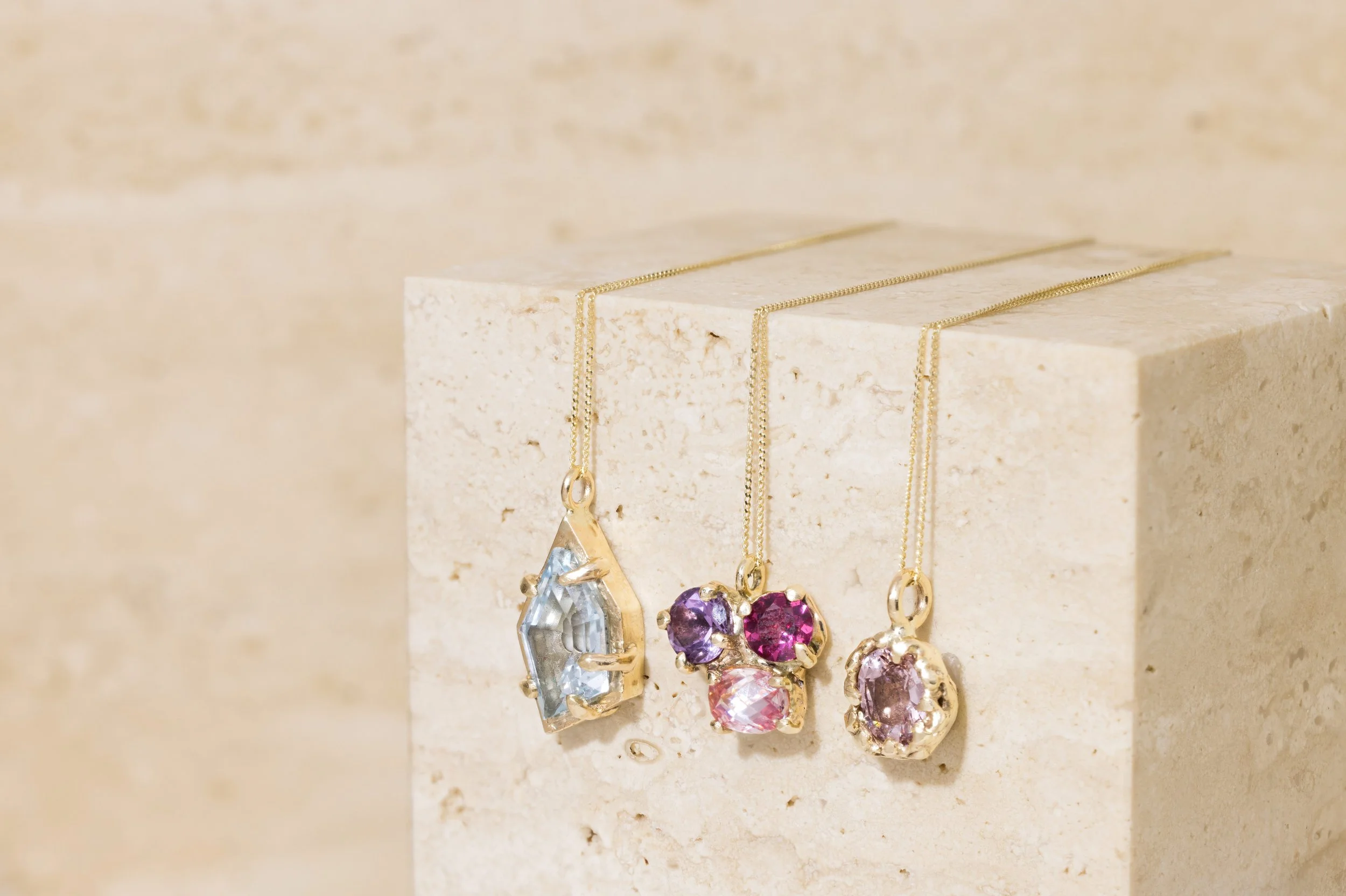
Jess originally challenged herself to create 24 pieces. That eventually became 28, with the collection focusing mainly on rings and pendants, particularly gold rings featuring gemstones. For somebody starting their first jewellery collection, Jess would usually recommend something smaller, around eight to twelve pieces, before putting the collection into the world, seeing how people respond and building from there. Your first collection does not need to show everything you will ever make; it simply needs to show people where you are beginning.
5. You can build a business around the time you actually have
A common question from anyone trying to start a jewellery business alongside work, family or other commitments is:
“When am I supposed to find the time?”
Ideally, allocating regular time to your jewellery business can help enormously but Jess also found that being less rigid worked better for this particular project. Rather than setting a demanding production schedule, she made jewellery when she had the space and energy to do it. An hour here. A Sunday afternoon there. Then perhaps nothing for several weeks. Those small pockets of time gradually became a collection.
This will not be the right approach for everybody. If your jewellery business needs to become your main source of income quickly, you will probably need more dedicated working hours. But don't underestimate what can be achieved consistently in relatively small amounts of time. Not having three uninterrupted days available does not mean you cannot make progress.
6. Things will go wrong and that is part of becoming a better jeweller
Not every piece Jess made survived the process. One nine-carat gold pendant containing a beautiful spinel cracked while she was setting the stone after many hours of work. On another piece, she had already set two stones when a claw broke as she was setting the third. She had to unset the existing stones, repair the claw and begin setting them again. Frustrating? Definitely. A sign that you shouldn't be running a jewellery business? Absolutely not.
Mistakes, broken stones, failed settings and pieces that need to be remade are part of jewellery making. They also give you information.
Jess’s broken spinel prompted her to think more carefully about the combination of stone, setting style and pressure required. Other mishaps helped her improve her making and problem-solving skills. You can study jewellery making extensively, but some lessons only arrive when you are sitting at the bench working on a real piece. Building resilience is part of developing your craft.
7. Your jewellery doesn't need to appeal to everybody
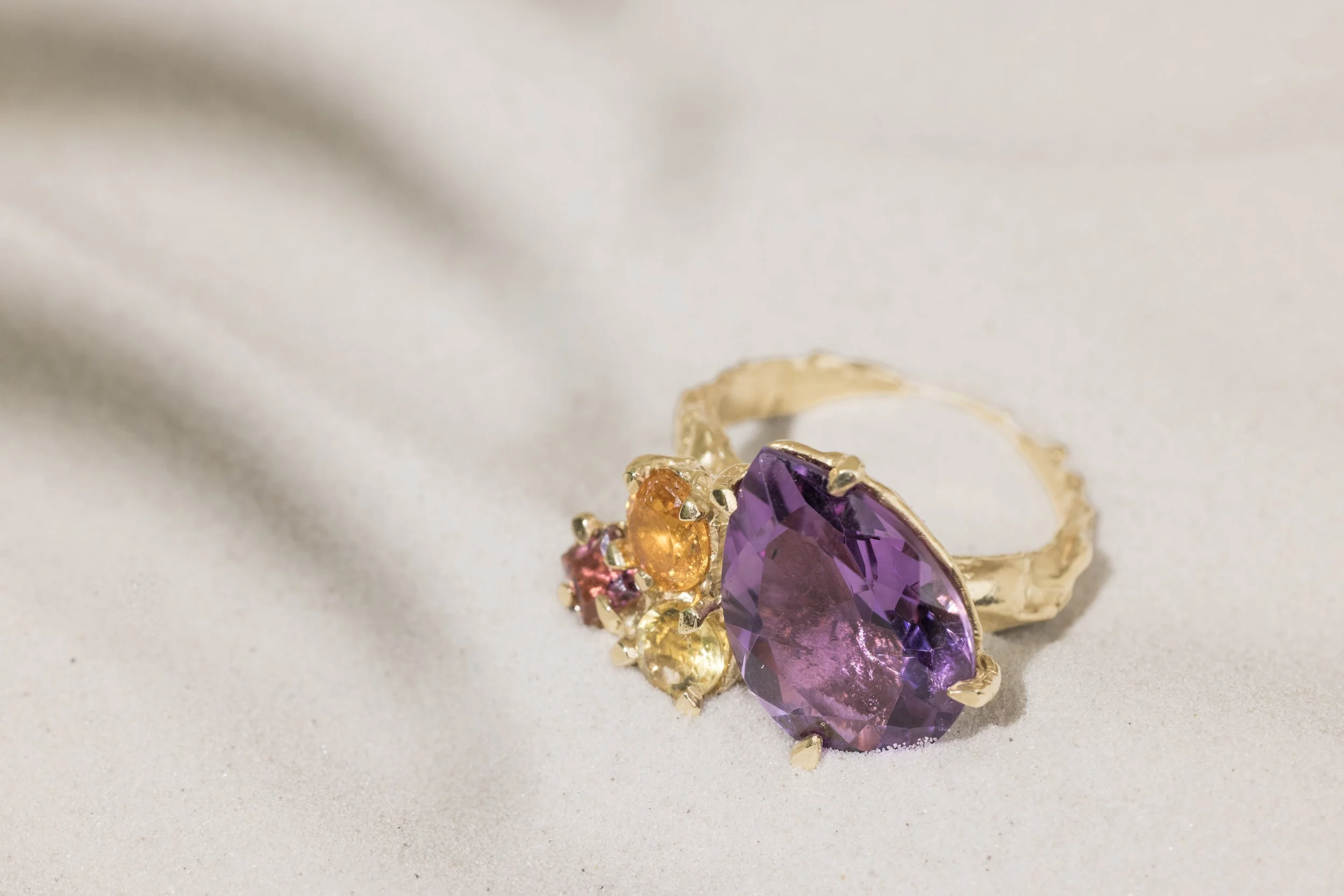
Creating a recognisable jewellery brand means making choices and as soon as you make choices, some people will prefer something else. Jess’s new collection has an organic style. She deliberately likes texture, irregularity and occasionally leaving visible marks from the making process. But that brought up an unexpected fear: Would other people look at the work and assume she simply couldn't make jewellery precisely? Would she be judged because the pieces weren't perfectly symmetrical? Eventually, she reached a useful conclusion.
Some people probably would judge it and that was OK. Precision jewellery and organic jewellery require different skills. One isn't automatically superior to the other. Trying to prove that you can make everything for everybody can result in a jewellery brand that has no clear point of view at all. When you develop your own aesthetic, there will be people who love it and people who don't. That is part of having a style.
8. Stop waiting until you have created something nobody has ever seen before
Another fear many jewellery designers experience is worrying that their work is not original enough. With thousands of jewellery designers sharing their work online, it is virtually impossible to create in complete isolation from anybody else's influence. Jess spends a huge amount of time looking at jewellery through her work at Jewellers Academy and supporting other jewellery designers online. That led her to wonder whether somebody might look at her pieces and think they were similar to another jeweller's. Her conclusion was that there may well be jewellery with similarities but nobody else will create exactly her collection.
We all absorb influences from the world around us. The combination of your skills, materials, interests, references, experiences and design decisions will shape the work you make. Being inspired by a wider creative world is very different from deliberately copying another designer's work. There is room for different jewellers, different styles and different interpretations. Community over competition has always been central to Jewellers Academy, and that applies when you are developing your own work too.
9. Keep the first version of your jewellery business simple
Once the collection was finished, there were still dozens of decisions to make. Jess invested in professional product photography with jewellery photographer Karen Young and organised a separate model shoot, knowing those images could be used across her website, social media and marketing for a long time.
She sent the pieces for hallmarking.
She built her own Squarespace website.
She created simple branding using Canva.
Then came all the smaller questions that appear when you start selling jewellery online.
What chain lengths should she offer?
Should chains be included?
What should happen with international orders?
How should UK delivery work?
What information needed to be on every product page?
Instead of trying to create the ultimate version of the business immediately, Jess kept returning to one principle:
Keep it simple for now. For example, she chose to offer free UK shipping because her price points allow her to absorb the cost. For overseas customers, rather than building complicated international delivery options into the website immediately, customers can contact her for an individual shipping quote. The website itself is relatively simple too, it can grow later. Your jewellery business does not need every possible page, feature, shipping option, product category and marketing channel before you launch.Create the version that works now, you can change it later.
10. Launching is the beginning, not the finish line
Perhaps the most important lesson from Jess’s experience is what happens after you press publish on your website. Possibly… not very much and that can be completely normal.
We hear stories of product launches selling out within hours, but those launches often sit on top of years of audience-building, marketing and consistent visibility. A new jewellery business is different.
You open the shop.
Then you have to keep showing people that the shop exists.
Jess describes a jewellery business launch as the beginning of a much longer process: meeting customers, sharing your work, experimenting, changing things, building an audience and developing the business over time. Her initial marketing plan is deliberately manageable: posting on Instagram a couple of times a week and sending an email approximately once a month. That is an important reminder if you've recently launched your own jewellery website and you're wondering why orders haven't immediately appeared.
Nothing has necessarily gone wrong, you have simply started.
Starting your own jewellery business
One of the reasons Jess wanted to launch Jessica Rose Jewellery was to experience the process of building a jewellery business again in today's market.
Running a jewellery business looks very different from when she first started Brown Lily around 20 years ago. Websites are easier to build, social media has completely changed how makers connect with potential customers and there are new tools available to help jewellery designers market their work but many of the fundamental challenges remain the same.
You still have to decide what you want to make.
You still have to put your work in front of people.
You still have to invest without knowing exactly what the return will be.
And you still have to manage those moments when you wonder what everybody else will think.
The answer isn't to wait until every part of your jewellery business feels completely certain.
Make the collection.
Take the photographs.
Build the website.
Share the work.
Learn from what happens next.
Because launching isn't the point at which your jewellery business is complete, it's the point from which you get to build it.
Listen to the full episode of the Jewellers Academy podcast, 10 Things I Learnt In Launching My Own Jewellery Business with Jessica Rose, to hear Jess share more about creating her first collection, launching Jessica Rose Jewellery and the lessons she has learnt along the way.
You can also follow Jess’s new jewellery-making journey at Jessica Rose Jewellery and visit jessicarose.com to see the collection.
jewellery business academy 2027
If you’re ready to take your jewellery business more seriously, the Jewellery Business Academy is designed to help you do exactly that.
It’s a year-long programme created specifically for jewellers who want to start, grow or strengthen their business. From January to December, we work through the key areas of building a successful jewellery business, including branding, product strategy, photography, marketing, websites, pricing, email marketing, selling and launching.
You’ll have monthly business training alongside small-group mentoring, quarterly planning and check-in sessions, practical resources and support from a community of other jewellers building their businesses too.
The focus isn’t simply on learning more about business, but on actually putting what you learn into practice throughout the year. You’ll have time to work on your business step by step, see what is working and get support when you get stuck. Every student also receives an individual mentoring session with a jewellery business expert.
For 2027, there is also the option to add a full year of one-to-one business mentoring for more personalised support. The Jewellery Business Academy runs from January to December 2027, with just one intake for the year. If you’d like to find out more and join us, visit the Jewellery Business Academy page.