
Jewellery Making with Hinges: How to Add Movement and Mechanisms to Your Designs
When you first start making jewellery, your focus is naturally on learning how to create beautiful forms. You learn to saw, file, shape, solder, texture and polish metal, gradually building the skills that allow you to turn an idea into a finished piece of jewellery.
But there comes a point when you might want your jewellery to do more.
Perhaps you want to make a locket that opens to reveal something inside. A bracelet that opens and closes in a particular way. A clasp that becomes part of the design rather than something hidden at the back. This is where learning about hinges and jewellery mechanisms can open up a whole new area of design.
A hinge may be a relatively small part of a finished piece, but learning how to incorporate one successfully requires you to start thinking not only like a jewellery maker, but also like an engineer. How will the different parts fit together? Where does the movement need to happen? How will the piece open and close? And how can the mechanism become part of the jewellery itself?
For intermediate jewellers looking for their next challenge, hinged jewellery can be an incredibly satisfying direction to explore.
What is a hinge in jewellery making?
At its simplest, a jewellery hinge creates a pivot point between two parts of a piece, allowing them to move in relation to one another.
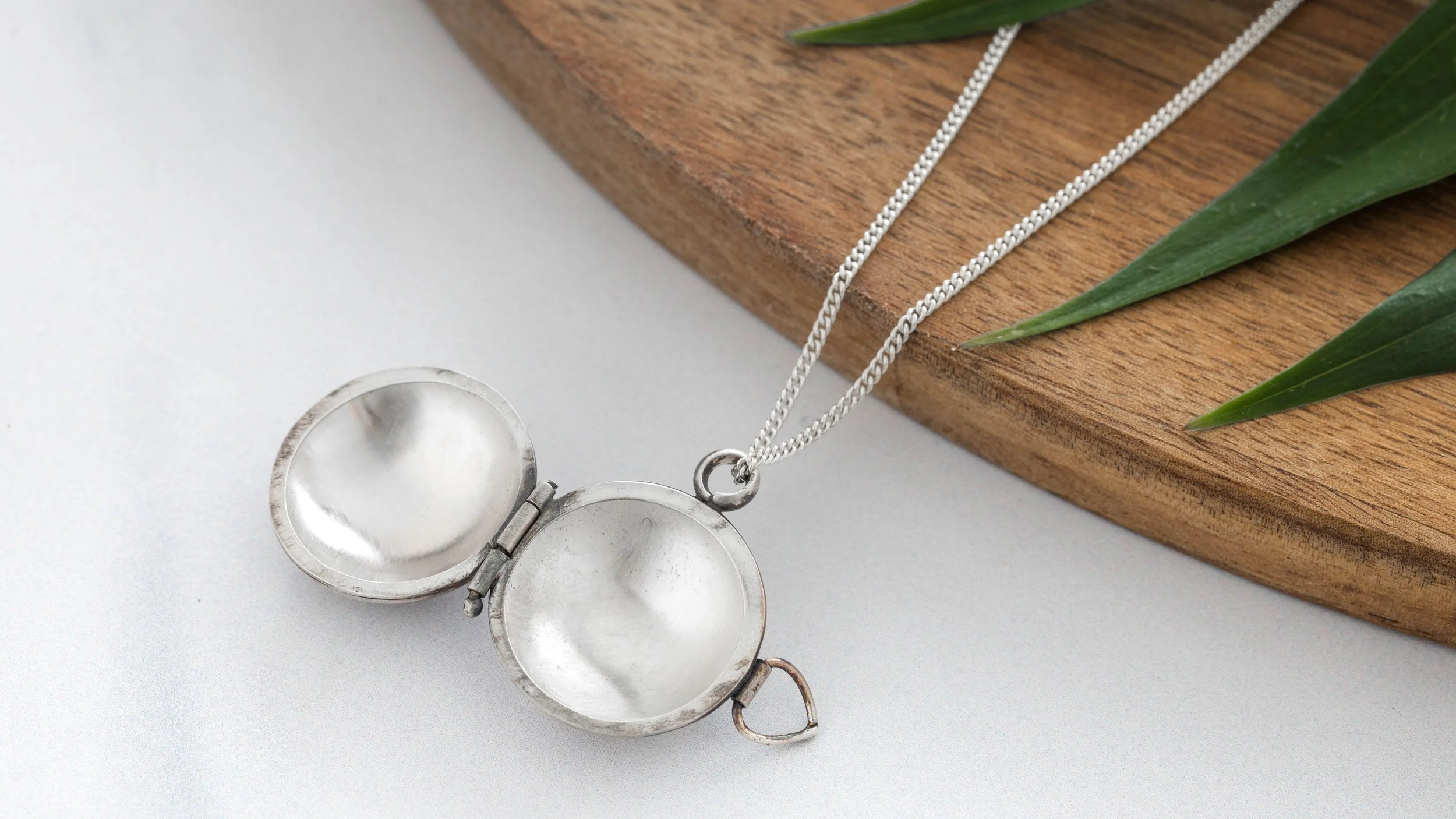
Traditional jewellery hinges are commonly made using sections of tubing with a pin passing through them (see photo above). The different sections need to align accurately so that the finished joint can move freely while remaining secure. The dimensions and strength of the tubing and hinge pin also need to be appropriate for the piece being made.
It sounds simple in principle, but hinge making brings together a number of jewellery-making skills.
There is measuring and accurate cutting. Components need to fit together precisely. Soldering has to be controlled so that the hinge is secured to the jewellery without interfering with the movement of the mechanism. And the finished piece needs to function properly as well as looking beautifully made.
That combination of craftsmanship and problem-solving is part of what makes hinges such an interesting skill to learn.
Why learn to make hinges in jewellery?
Learning to make a hinge isn't only about mastering one particular technique. It expands the kinds of jewellery you can begin to imagine making.
Without a mechanism, many jewellery designs are essentially fixed forms. Once you begin introducing hinges, rivets, catches and other moving elements, you can start thinking about interaction too.
A pendant might open.
A bracelet might be designed around the way it moves onto the wrist.
A locket can conceal a photograph, tiny object or message.
A closure can become a deliberate feature of the piece rather than simply a practical necessity.
This is one of the exciting shifts that happens as your jewellery-making skills develop. Instead of asking only ‘What do I want this piece to look like?’, you can start asking ‘What do I want this piece to do?’
That can completely change the way you approach a design.
Jewellery mechanisms bring together design and function
One of the most interesting things about learning to make jewellery mechanisms is that function can't really be separated from design.
If you are making a simple pendant, you have considerable freedom over the shape and decorative details. If you are creating something that has to open, close or pivot, the way the wearer interacts with the jewellery becomes part of the design itself.
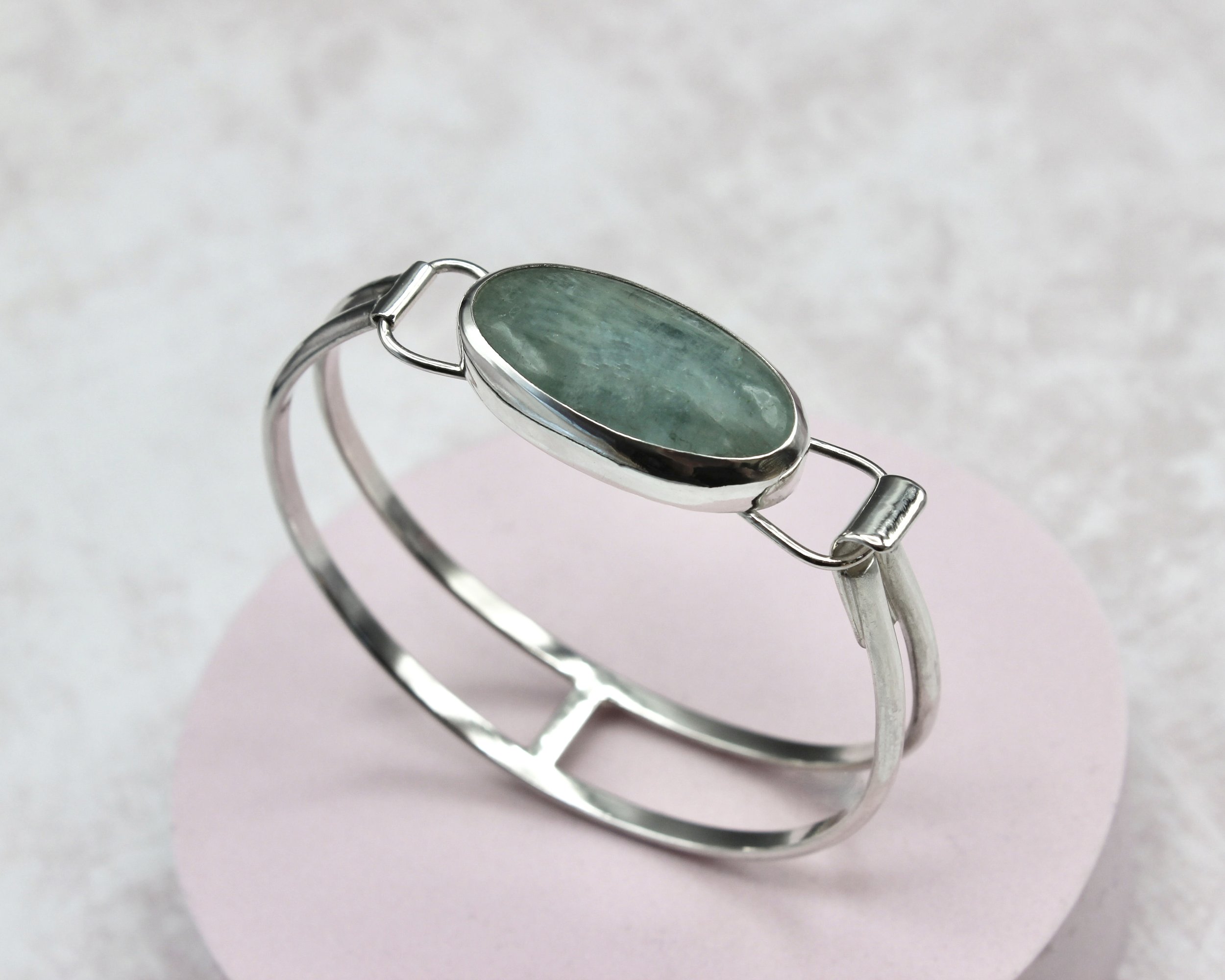
A hinged bangle has to open far enough for the wearer to put it on.
A locket needs to open and close reliably.
The different parts of a hinge need sufficient clearance to move.
A clasp needs to be secure enough that the jewellery won't accidentally come undone.
Suddenly, fractions of a millimetre can make a very real difference to whether your finished piece works.
That is why mechanisms can be such a brilliant next step for an intermediate jeweller. They encourage greater accuracy and precision while introducing a completely different way of thinking about jewellery construction.
What types of jewellery can use hinges?
Lockets are probably one of the first examples that come to mind when we think about hinged jewellery, but hinges can be incorporated into all sorts of designs.
You might find them in bracelets and bangles, opening pendants, brooches, hoop earrings, containers and more sculptural pieces of jewellery. Jewellers also use a range of different hinge styles and related mechanisms depending on the structure and function required.
The mechanism doesn't necessarily have to be hidden, either.
In some pieces, the aim might be to make the hinge as discreet as possible so that the eye is drawn entirely to the jewellery design.
In others, the engineering can become part of the visual interest.
That gives you another creative decision to make: do you want the mechanism to disappear into the jewellery, or do you want to celebrate it?
A great first hinged jewellery project: make a silver locket
If you've never made a hinge before, a locket is a wonderful project to explore.
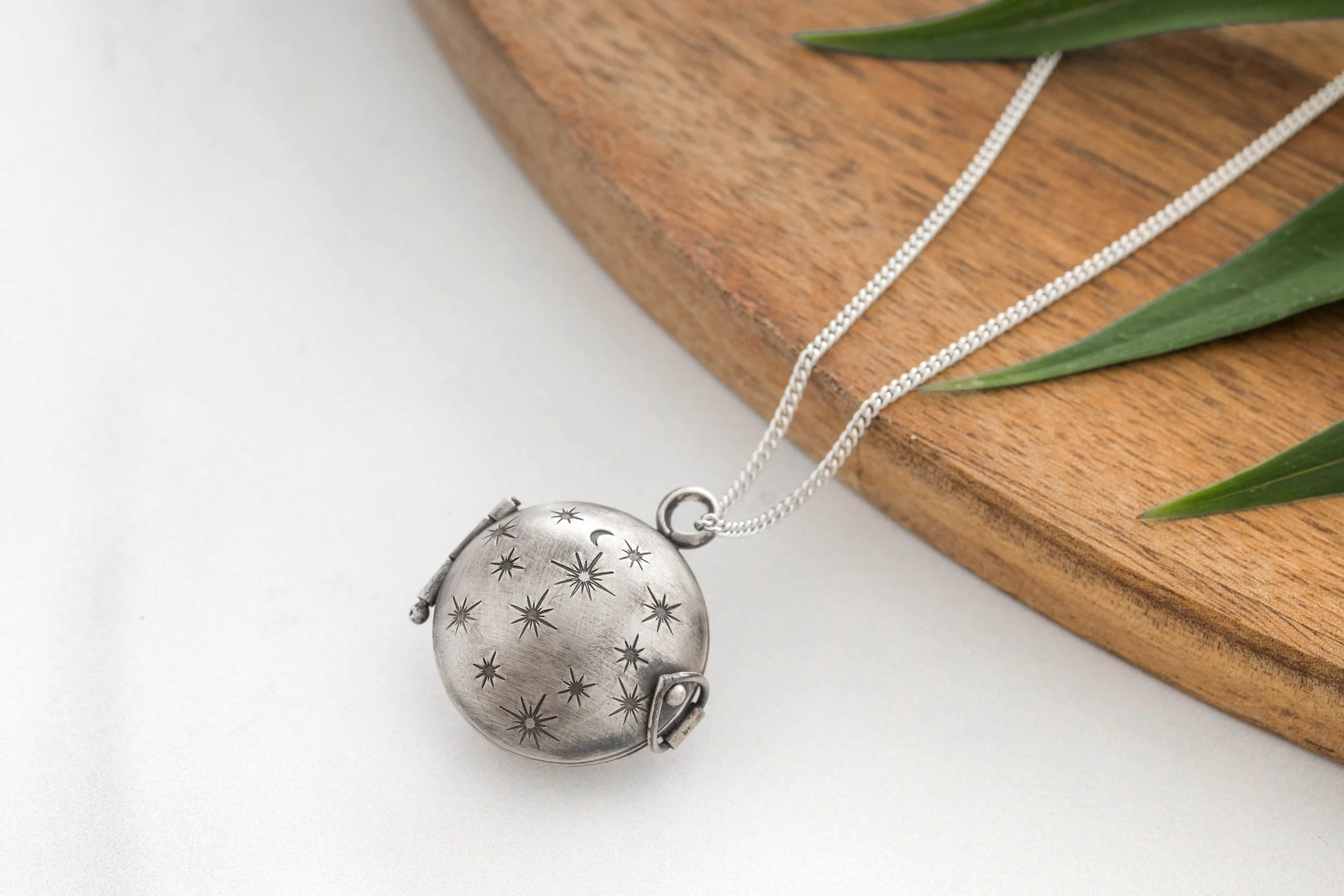
A locket is essentially jewellery with a secret. What appears from the outside to be a beautiful pendant can open to reveal a photograph, keepsake or something meaningful to the wearer.
Our Make a Domed Locket online course is completely free and teaches you how to create two different styles of silver locket: a hinged locket with a clasp and a riveted locket.
As part of the hinged version, you learn techniques including doming metal, making and soldering a hinge, creating the retention circle that holds a photograph or keepsake inside, making the locket clasp and creating the bail. The course also teaches riveting through the alternative locket project, so you can see another way of introducing movement into a jewellery design.
It's a lovely example of how several individual jewellery-making techniques come together to create something that is both decorative and functional.
LEARN TO MAKE A DOMED LOCKET FOR FREE
Take hinge making further with a torque bangle
Once you start looking at hinges as part of the design rather than simply a component, there are some really exciting possibilities.
Our Torque Bangle online course takes the idea of a jewellery mechanism into a different type of project.
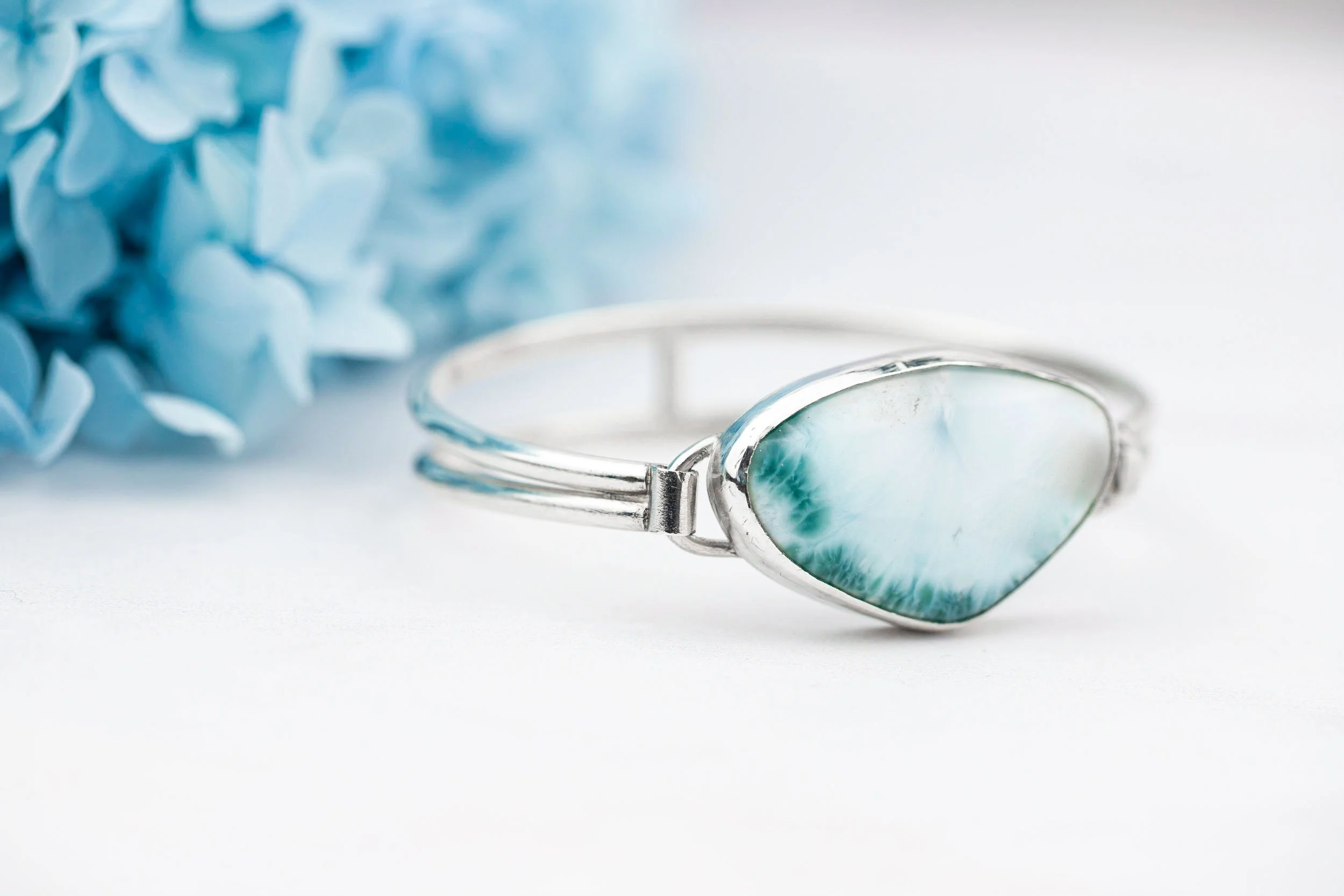
A traditional torque bangle is an open-ended bangle, but in this intermediate course you'll learn to create two innovative variations of the design.
The first incorporates a hinged opening, making the bangle easier to put on and take off. The gemstone forms part of the secure clasp, so the functional mechanism and decorative element work together within the design.
The second version takes that idea even further by incorporating an interchangeable gemstone. The stone can be removed and swapped, allowing the wearer to change the look of the bangle.
This is where jewellery mechanisms become particularly exciting from a design perspective. Instead of thinking about a hinge as something you need to add because the piece has to open, you can begin designing around the mechanism itself.
The way the jewellery functions becomes part of what makes the piece special.
EXPLORE THE TORQUE BANGLE COURSE
Explore hinges in metal clay
Hinges aren't only for traditionally fabricated silver jewellery. If you work with metal clay, you can also use hinges and other mechanisms to introduce movement and function into your designs.
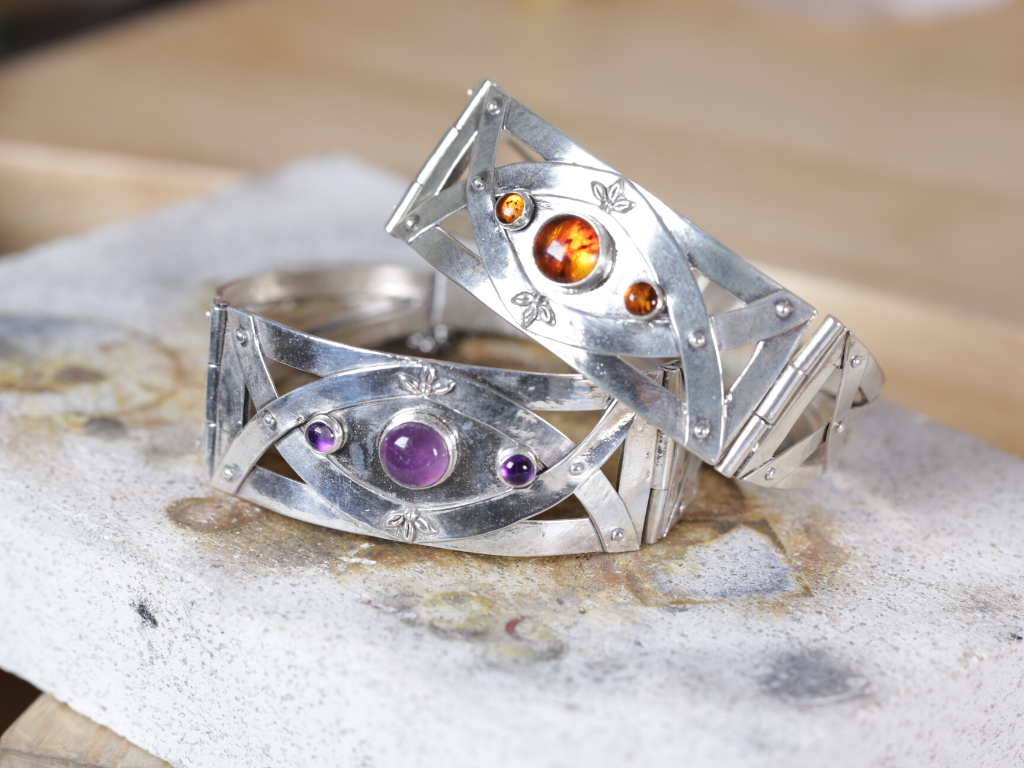
Our Advanced Metal Clay: Stone Set Hinged Cuff course, taught by metal clay jewellery artist Tracey Spurgin, shows you how to create a hinged, stone-set bangle from sterling silver clay. It's a great example of how the principles of jewellery engineering can be combined with the very different process of designing and constructing with metal clay.
As part of the project, you'll learn how to create hinges in silver clay, connect components using rivets, bezel set non-fireable gemstones and make a bracelet clasp. The finished cuff therefore brings together several mechanisms and techniques in one piece, rather than treating the hinge as an isolated skill.
Are you ready to start making hinged jewellery?
Hinges are generally a better next step once you already feel reasonably comfortable with some core silver jewellery-making techniques.
Precision becomes increasingly important when you're constructing moving components. Having experience of sawing, filing, fitting pieces together and controlling your soldering gives you a much stronger foundation from which to start experimenting with mechanisms.
You don't need to know how to create every kind of hinge or clasp before you begin. Like most jewellery-making skills, you can learn through individual projects and gradually build up your understanding.
Making a locket teaches you about the mechanism within one particular construction.
Making a hinged bangle gives you another challenge.
Over time, you begin to understand not just how to follow the steps for one project, but the principles behind why those mechanisms work.
And that is when you can start taking those skills into your own jewellery designs.
Making jewellery that moves changes the way you design
There is something particularly satisfying about finishing a piece of jewellery and discovering that it doesn't just look the way you wanted it to - it works.
The locket opens.
The clasp clicks into place.
The bangle moves around its hinge.
The different elements fit together precisely enough for the mechanism to function as planned.
It's a different kind of satisfaction from creating a beautiful texture or achieving the perfect polish, because you're bringing together both creativity and engineering.
And once you understand how to add movement, jewellery starts to offer even more possibilities.
You can think about what opens and what is revealed. What moves and what stays still. How the wearer interacts with the piece. Whether components can be changed. How a mechanism can solve a practical problem – or become the starting point for an entirely new design.
If you're ready to move beyond static forms and develop your intermediate jewellery-making skills, learning how hinges and mechanisms work is a brilliant place to start.
Try our FREE Make a Domed Locket course to explore making and soldering a hinge as part of a beautiful silver locket, or take your skills further with our Torque Bangle course, where you'll use hinges, stone setting and clever mechanisms to create a bangle with a difference.